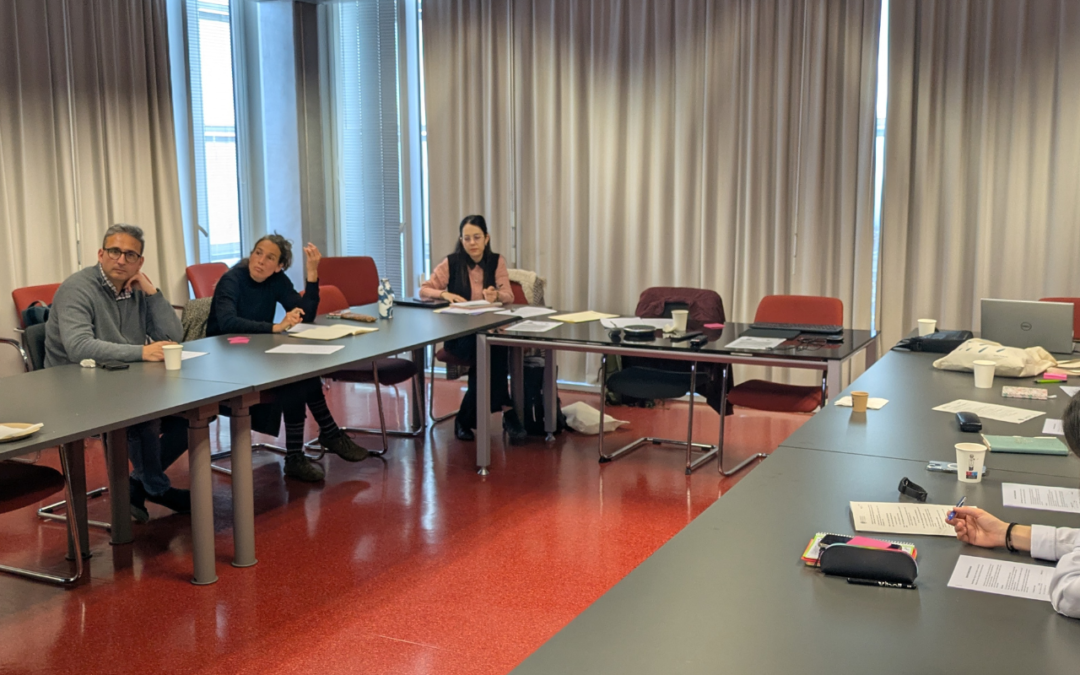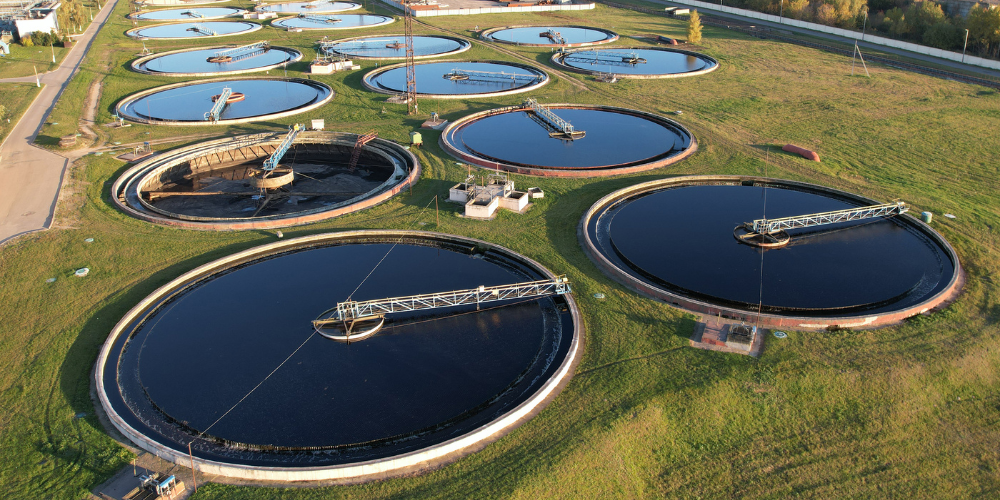
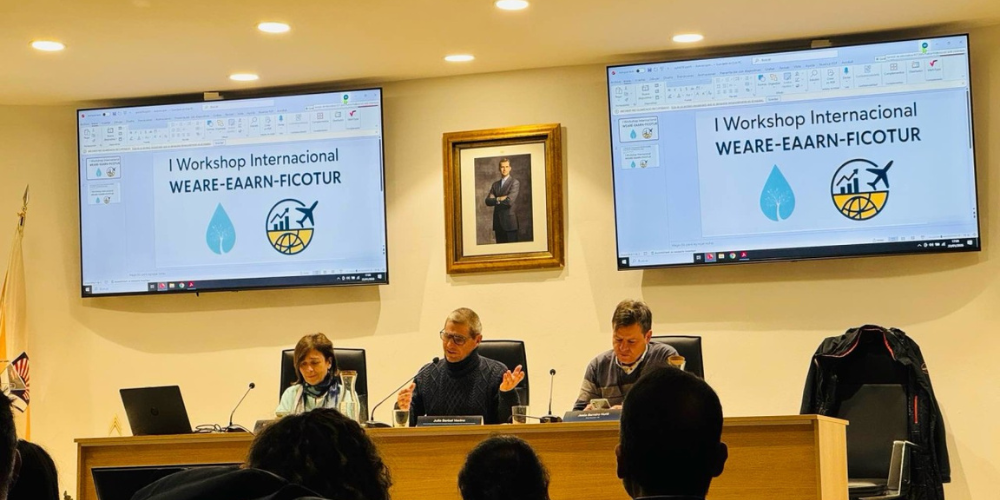
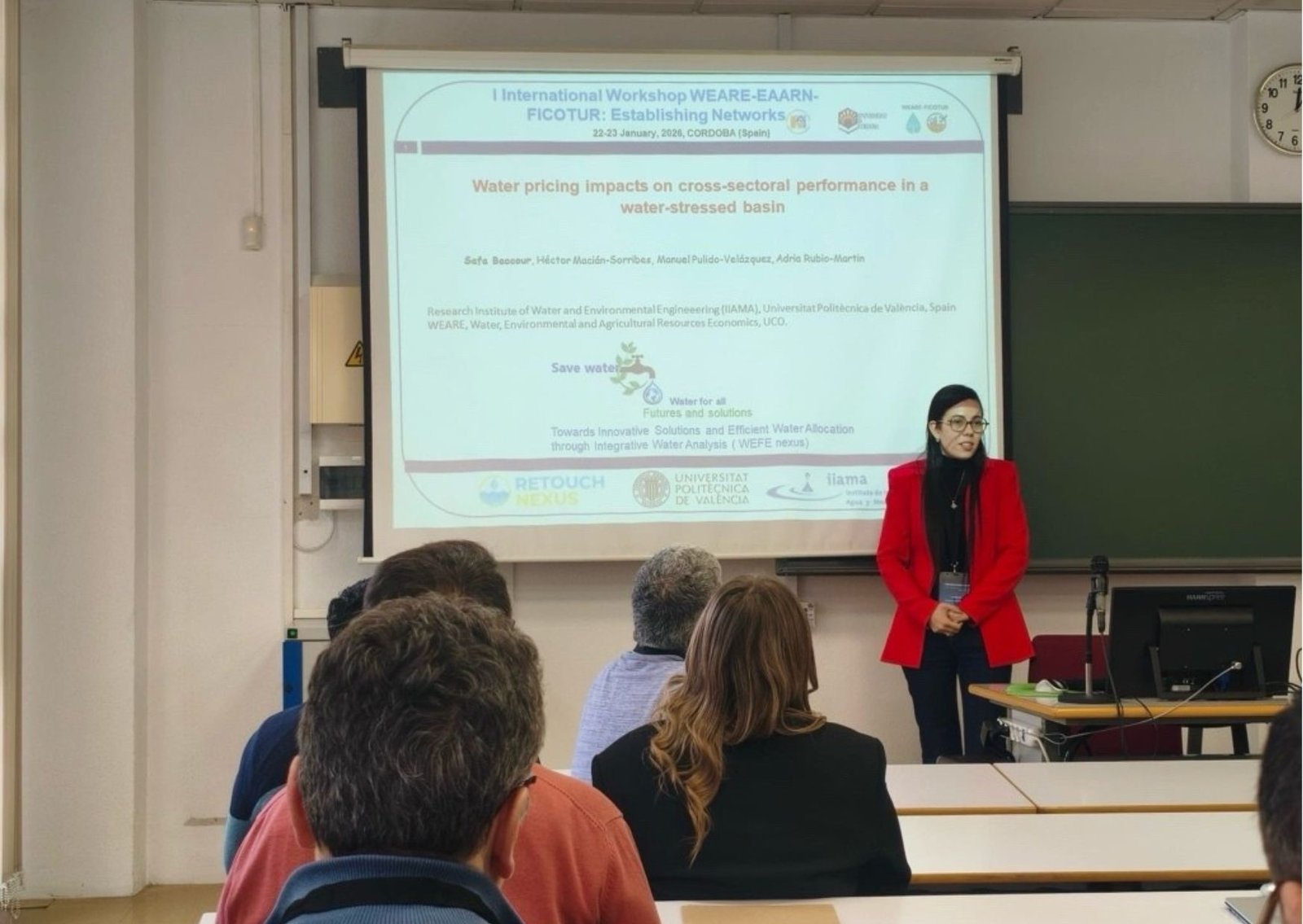
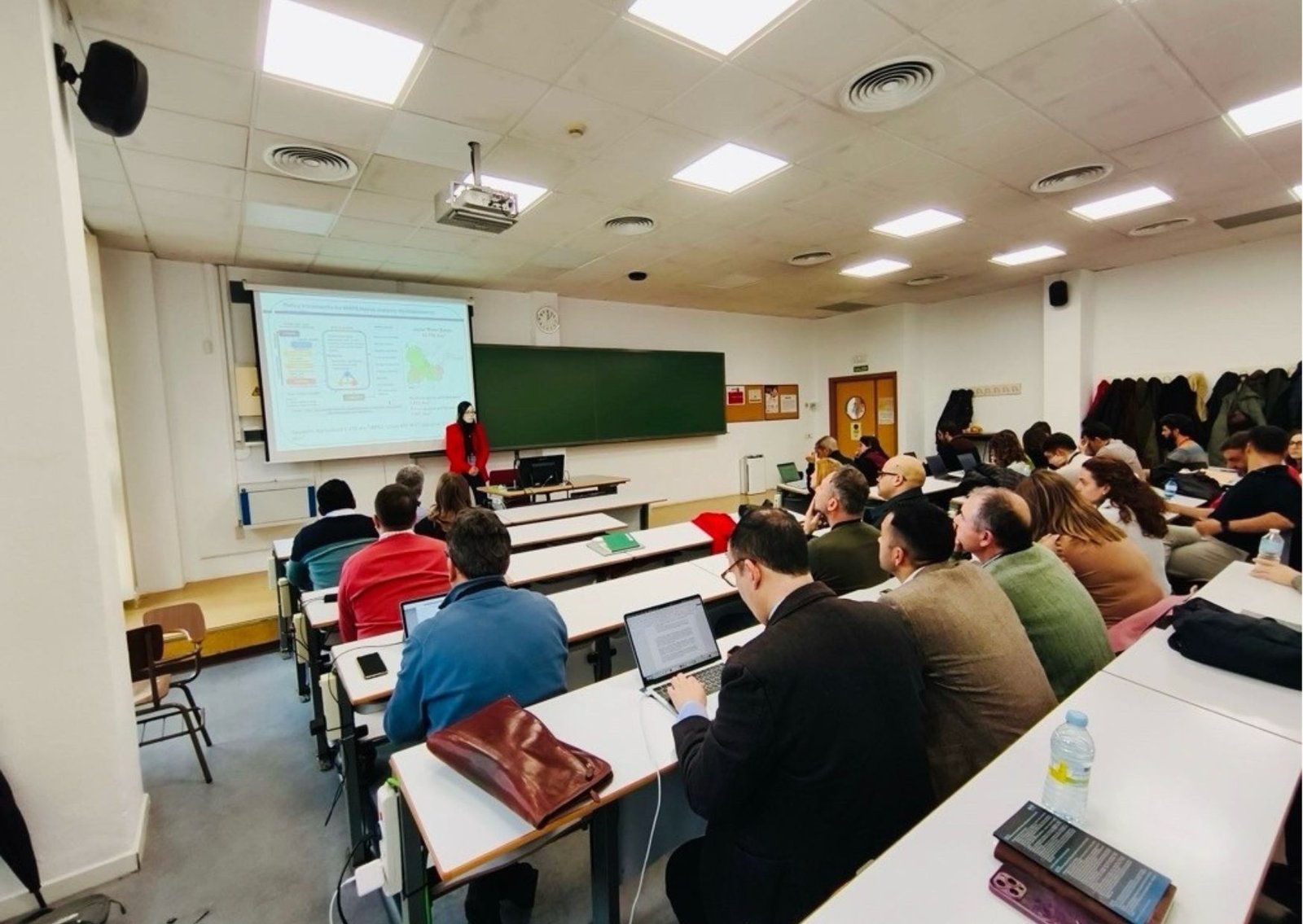
RETOUCH NEXUS was represented at the International Workshop WEARE-EAARN-FICOTUR: Establishing Redes, held on 22–23 January 2026 in Córdoba, Spain, within the session “Instruments and Policies for Enhancing Water Resilience.” The event brought together international researchers and practitioners to exchange knowledge on governance instruments, policy tools, and innovative approaches for strengthening water resilience in the face of climate change and growing socio-economic pressures.
A RETOUCH NEXUS Contribution to Water Resilience Research
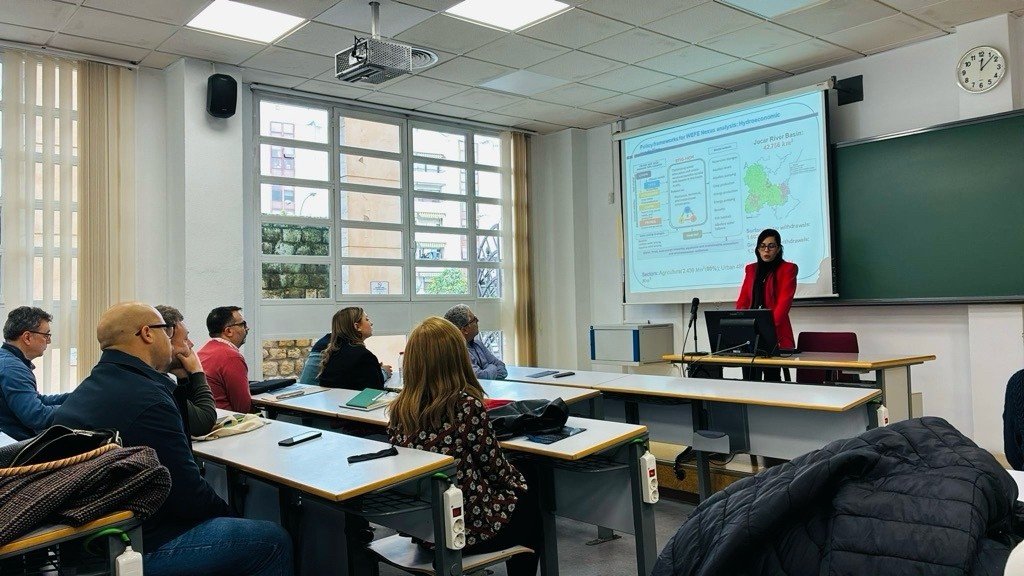
The RETOUCH NEXUS project was presented by Safa Baccour (UPV) with a contribution entitled: “Water pricing impacts on cross-sectoral performance in a water-stressed basin.”
The presentation addressed a central challenge in water governance: how to design policy instruments that simultaneously support water conservation, economic sustainability, and ecosystem protection across sectors.
Nexus-Based Modelling for Integrated Water Governance
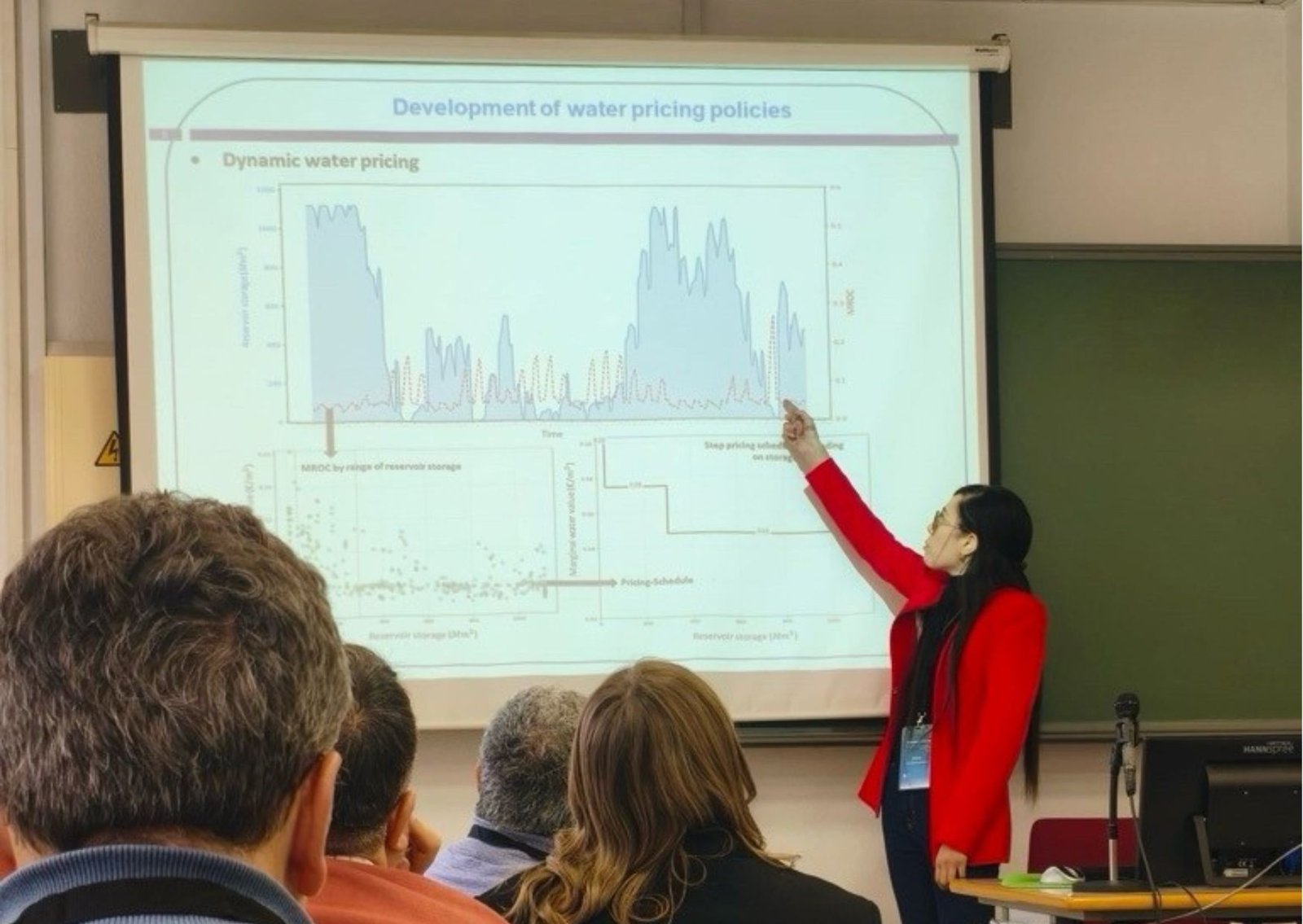
The research introduces an integrated hydro-economic model (HEM) developed within a Water-Energy-Food-Ecosystems (WEFE) Nexus framework. This model links biophysical, hydrological, economic, and ecological components to assess cross-sectoral performance under future climate and socio-economic scenarios. It integrates climate projections, hydrological modelling, agricultural water demand, energy and agricultural price projections, and ecological indicators, enabling a systemic analysis of water governance strategies.
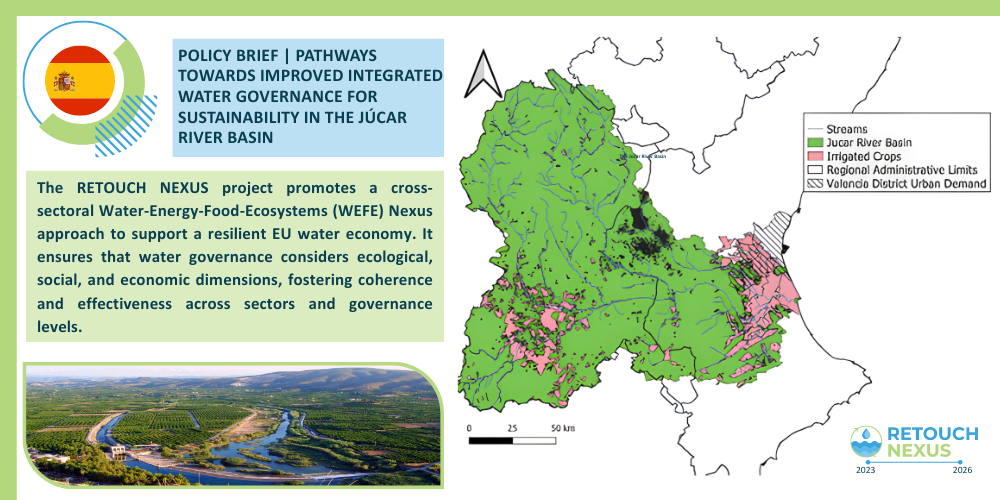
Evidence from the Júcar River Basin
Applied to the Júcar River Basin, the study evaluates uniform and dynamic water pricing strategies. The results demonstrate that both approaches can significantly reduce unsustainable water use, improve system efficiency, and strengthen ecological resilience. Uniform pricing generates strong conservation incentives and major reductions in water withdrawals, while dynamic pricing enables more adaptive management by adjusting prices to scarcity conditions, helping to preserve economic performance across sectors. Both strategies contribute to reducing habitat stress and improving long-term ecosystem stability.
Strengthening Nexus-Aligned Water Policies
This contribution provides concrete evidence of how well-designed, nexus-aligned water pricing policies can optimize trade-offs between sectors, support sustainability, and promote balanced outcomes across water, energy, food, and ecosystems. Participation in the WEARE-EAARN-FICOTUR workshop also strengthened RETOUCH NEXUS’s engagement with international research networks working on integrated, climate-resilient water governance.
Through this activity, RETOUCH NEXUS continues to demonstrate how science-based, cross-sectoral tools can support more equitable, efficient, and resilient water management in water-stressed regions across Europe and beyond.