
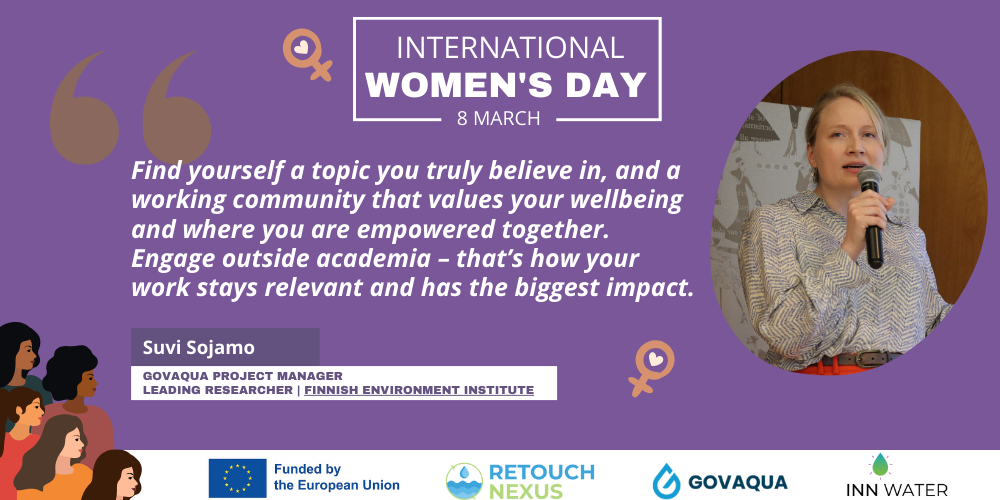
Together with our sister projects of the Gobernanza del agua 2027 Grupo de Sinergia, GOVAQUA and InnWater, we are delighted to dedicate this article to our female researchers to promote their work and careers around the development of water governance approaches.
These innovative approaches take into account the interdependencies between the UN Sustainable Development Goals (SDGs) and the design of coherent water governance practices and policies at different levels and in different sectors.
As part of GOVAQUA, we interviewed Ms Suvi Sojamo, PhD, leading Researcher at the Finnish Environment Institute.
Career and challenges
Q.: Ms Sojamo, can you tell us about your journey to becoming a researcher, the challenges you encountered along the way and the most important lesson you learned?
Ms Suvi Sojamo: I’ve always been a keen learner, and being a researcher has essentially been about having the chance to dive deep into topics that interest me. To me research is about working together to investigate the best ways to solve water challenges, not a solitary exercice. Within the research community, I’ve been trusted to work with exciting and new topics, and the best results have always been achieved when we have had a team that genuinely supports each other.
Water challenges cannot be solved by researchers alone though, and collaborating with governments, business and civil society organisations has been critical for my work and very rewarding.
Role in the project
Q.: What do you do within the GOVAQUA project? How have your studies and expertise enabled you to fulfil this role?
Ms Suvi Sojamo: I am the coordinator of the GOVAQUA project. Essentially, I see my role as an enabler for our consortium’s broader effort. I have a very multidisciplinary background and have worked with various sectors and actors, which helps me to understand both the bigger picture and to a sufficient detail the specifities of our in-depth research led by top experts in their fields. I act as sort of a facilitator and interpreter within and beyond the project, also supporting our communication and outreach activities.
Europe
Q.: At European level, do you think the research sector has become more open to women? What could be done to achieve greater equality between men and women in this field?
Ms Suvi Sojamo: In principle yes, but I do still see many structural issues. In my experience women e.g. often opt out of tenure-track careers due to their increasing demands – women want to prioritise family and have also become more critical (maybe more than men) towards the system where you in the worst case have to sacrifice your free time and well-being. In general, it would be important to understand where the roots of inequality are, and start addressing the issues from there. Gender quotas and different guidelines and tools for gender sensitivity are also important in raising awareness and establishing new practices. A more equal system would be to the benefit of all.
Q.: As an expert in sustainable water governance, what do you see as Europe’s greatest challenge in implementing sustainable water governance?
Ms Suvi Sojamo: We need to come to a shared and honest understanding of the responsibility in and impacts on different actor groups in the water challenges we are facing, and together develop ways on how to mitigate harm and engage in restorative action. Not all the water uses can be justified anymore, and on the other hand we need to ensure basic needs for everyone. Whilst governments are mandated to lead, progressive businesses and civil society should also show the way. Research has a critical role to play as well as a provider of a robust knowledge base and research organisations can also facilitate interaction.
Q.: Finally, what advice would you give to future generations of women who want to become researchers?
” Find yourself a topic you truly believe in, and a working community that values your wellbeing and where you are empowered together. Engage outside academia – that’s how your work stays relevant and has the biggest impact.“
Suvi Sojamo
Read other interviews with the researchers:

RETOUCH NEXUS at World Water Week 2026: Advancing Innovative Water Governance
Stockholm, Sweden – 23-27 August 2026 RETOUCH NEXUS is proud have participated in the World Water Week 2026, the leading…
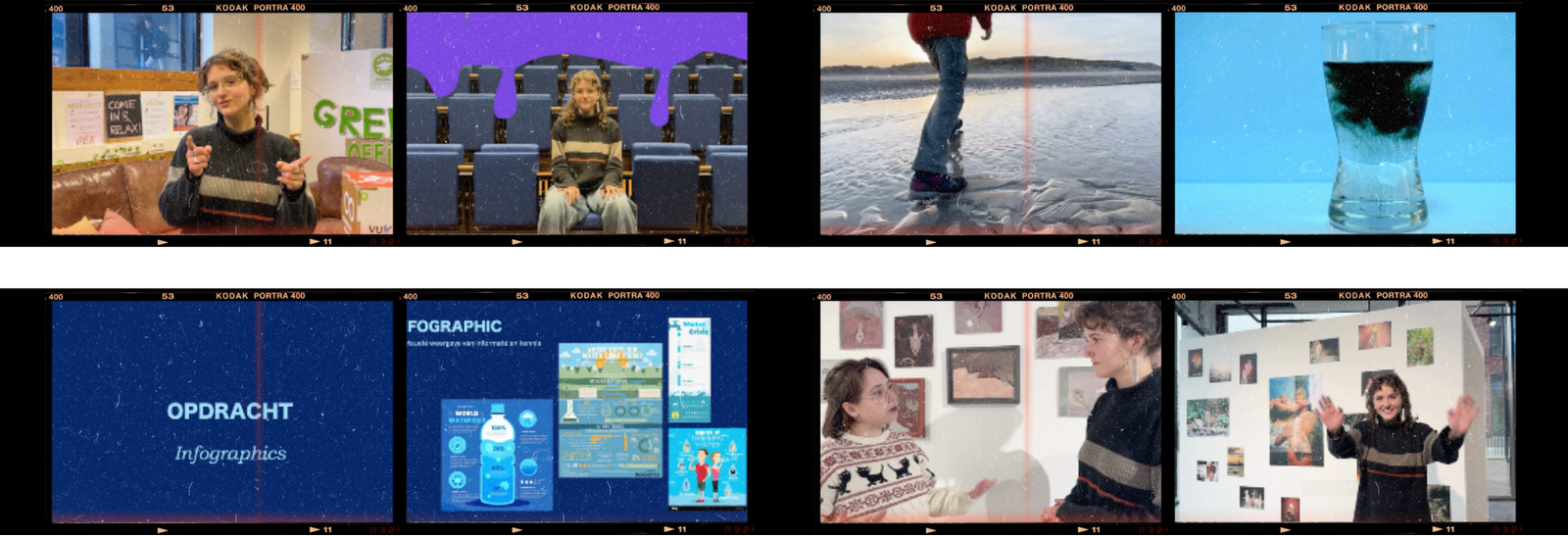
What Lives Beneath the Surface? Youth Voices on Interconnected Water Problems, Through Art and Media
A collaboration between X11 (Media, Design & Technology high school, Utrecht) and the Dutch case study of the RETOUCH project,…
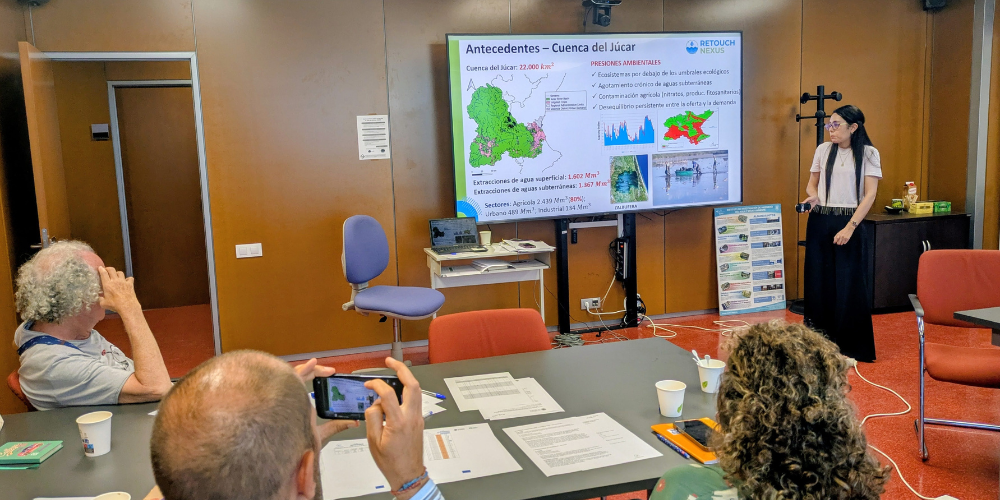
Validating Water Pricing Policies in the Júcar Basin: Highlights from Our Spanish Workshop
On Friday, 12 June, the RETOUCH NEXUS team brought together researchers and stakeholders in Valencia for a hands-on workshop dedicated to the Júcar River Basin. Putting the Hydroeconomic Model to the…
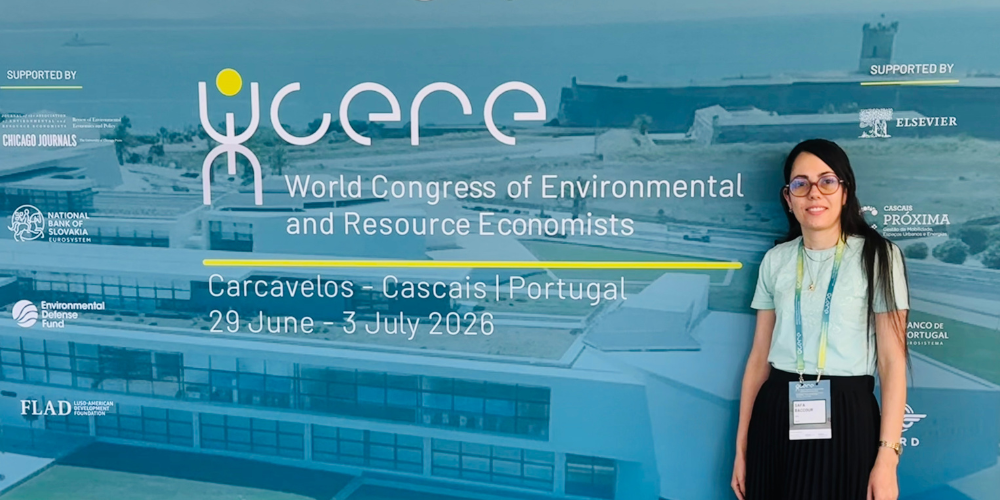
How Should Water Be Priced Under Climate Scarcity? RETOUCH NEXUS at WCERE 2026
RETOUCH NEXUS was represented at the 7th World Congress of Environmental and Resource Economists (WCERE 2026), held from 29 June…
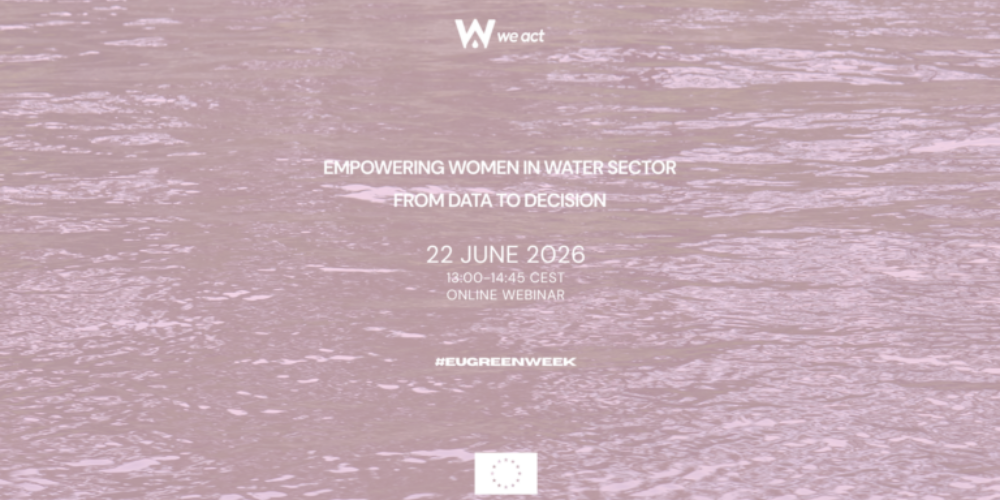
Empowering Women in Water Governance: Join WE-ACT Free Webinar on 22 June
Water security and gender equality are two of the defining challenges of our time, and they are more connected than…
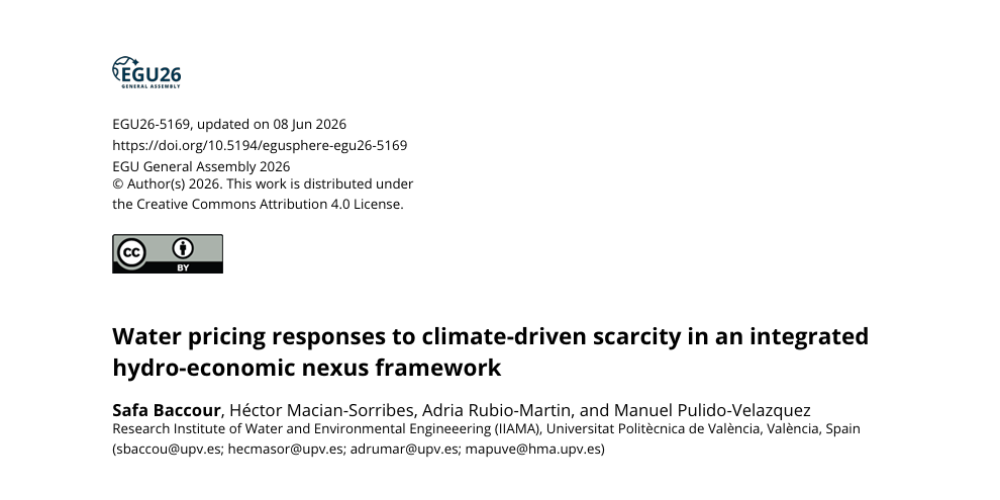
How Should Water Be Priced in a Changing Climate? Safa Baccour Presents New Findings at EGU 2026
Research from the IIAMA institute explores how uniform and dynamic water pricing strategies can reduce unsustainable withdrawals, protect ecosystems, and…
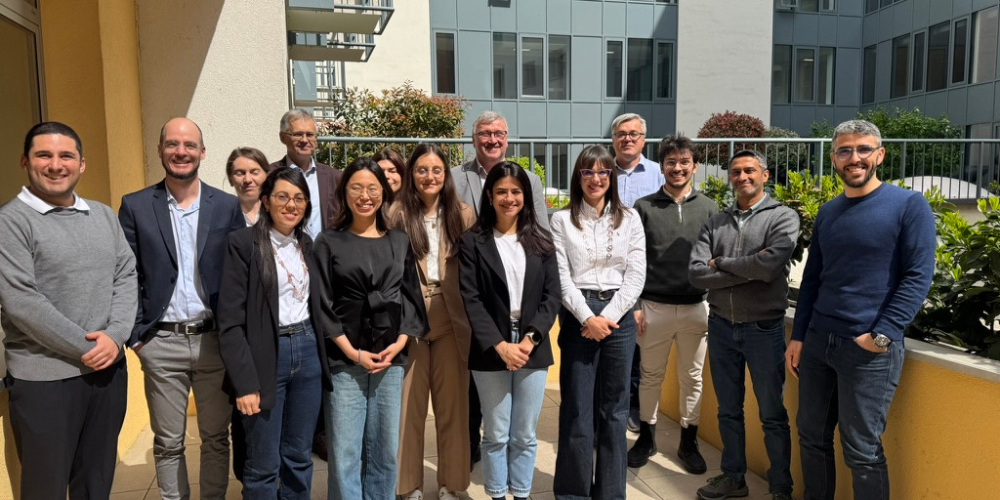
RETOUCH NEXUS 6th General Assembly – Aligning for the Final Stretch
As we enter the final phase of the RETOUCH NEXUS project, our consortium gathered in Bratislava on April 20–21, 2026…

Check out the 6th RETOUCH NEXUS newsletter!
Are you passionate about sustainable water management and governance? 🌍💧 Subscribe to our newsletter and stay updated with the latest…
Pricing Water to Protect Nature: Our Partner Safa Baccour Presents at the International Conference on Climate Impacts in a Changing World 2026
We are proud to highlight the participation of our partner Safa Baccour from the Universitat Politècnica de València (UPV) at…
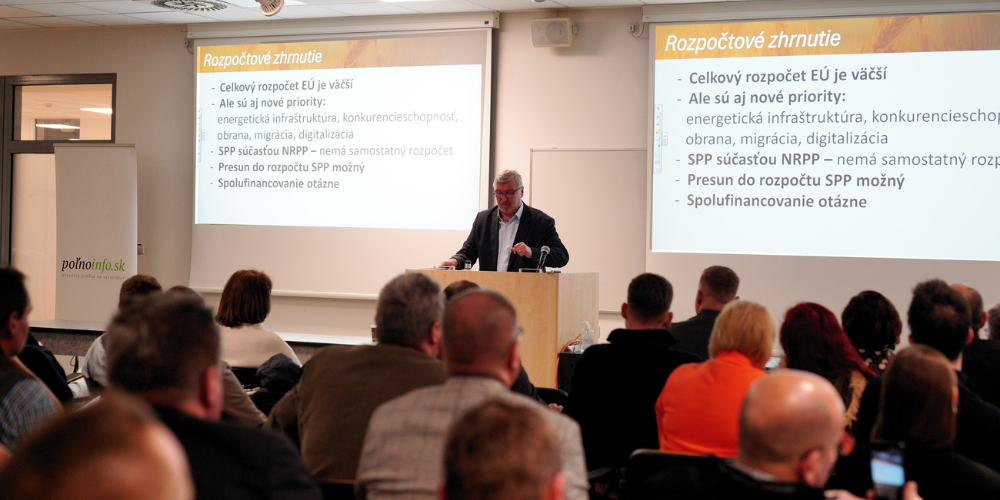
Experts Convene to Shape Slovakia’s Agricultural Future: Workshop on New EU CAP 2028–2034
Over 200 stakeholders gathered at the Slovak University of Agriculture in Nitra on February 5, 2026, for a landmark workshop…