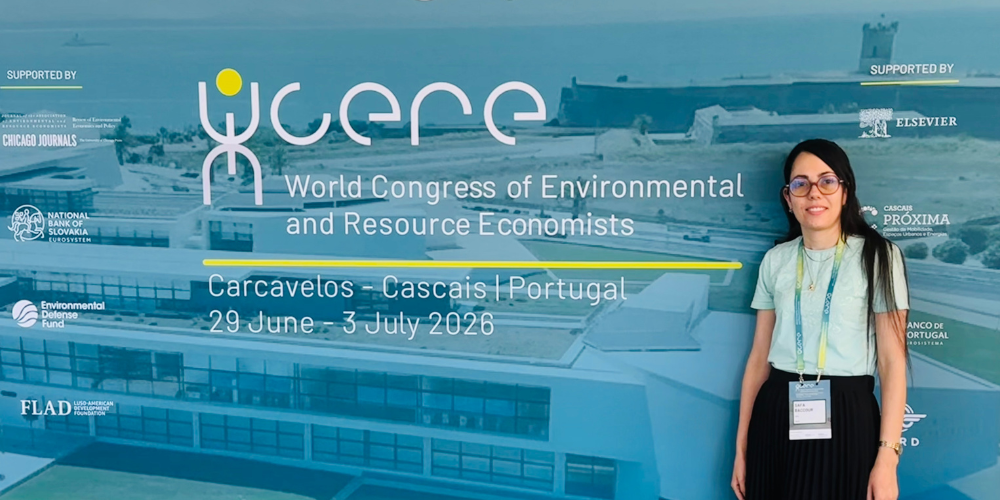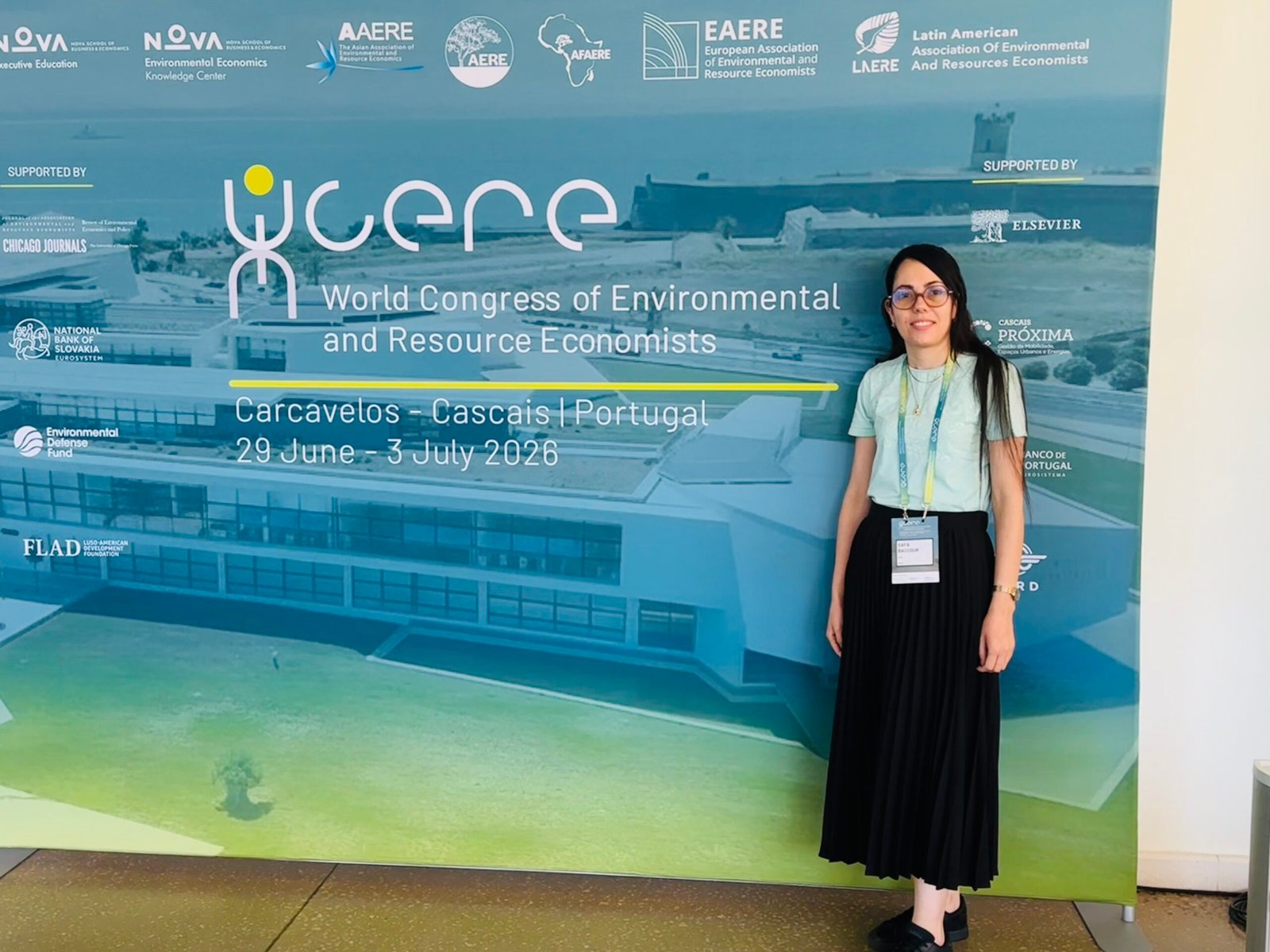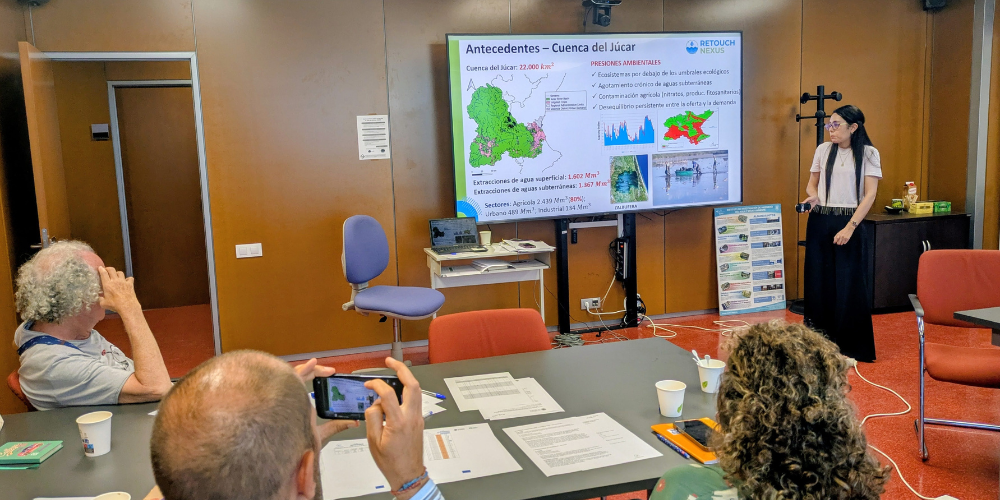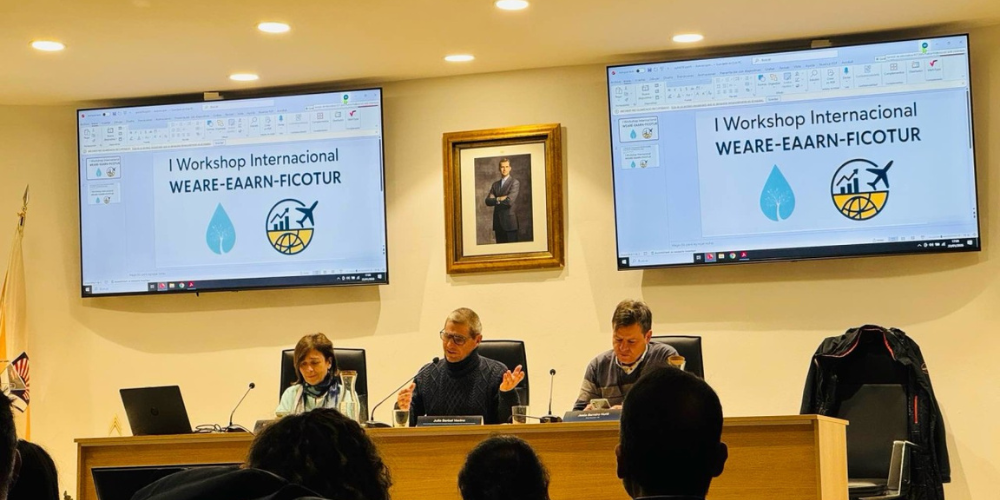
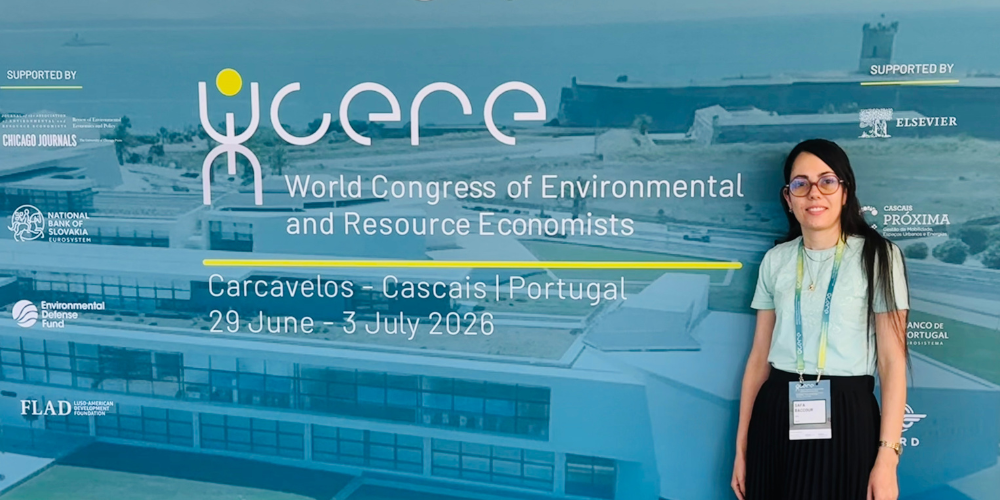
RETOUCH NEXUS was represented at the 7th World Congress of Environmental and Resource Economists (WCERE 2026), held from 29 June to 3 July 2026 at the NOVA School of Business and Economics campus in Carcavelos, Cascais, Portugal. WCERE is the flagship global gathering for environmental and resource economists, bringing together leading researchers and policymakers to address pressing challenges at the intersection of economics, environment, and governance.
A RETOUCH NEXUS Contribution on Water Pricing and Climate Scarcity
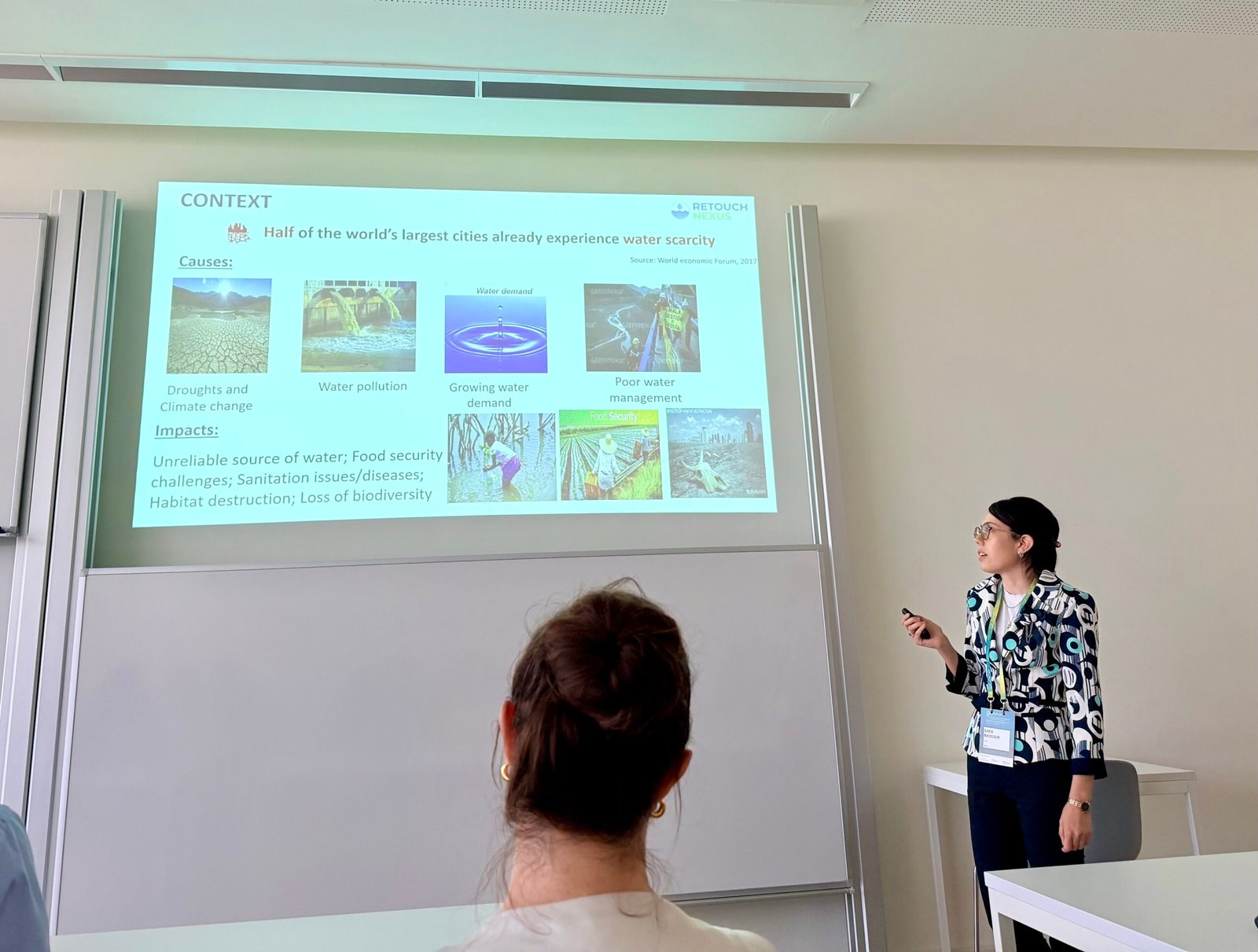
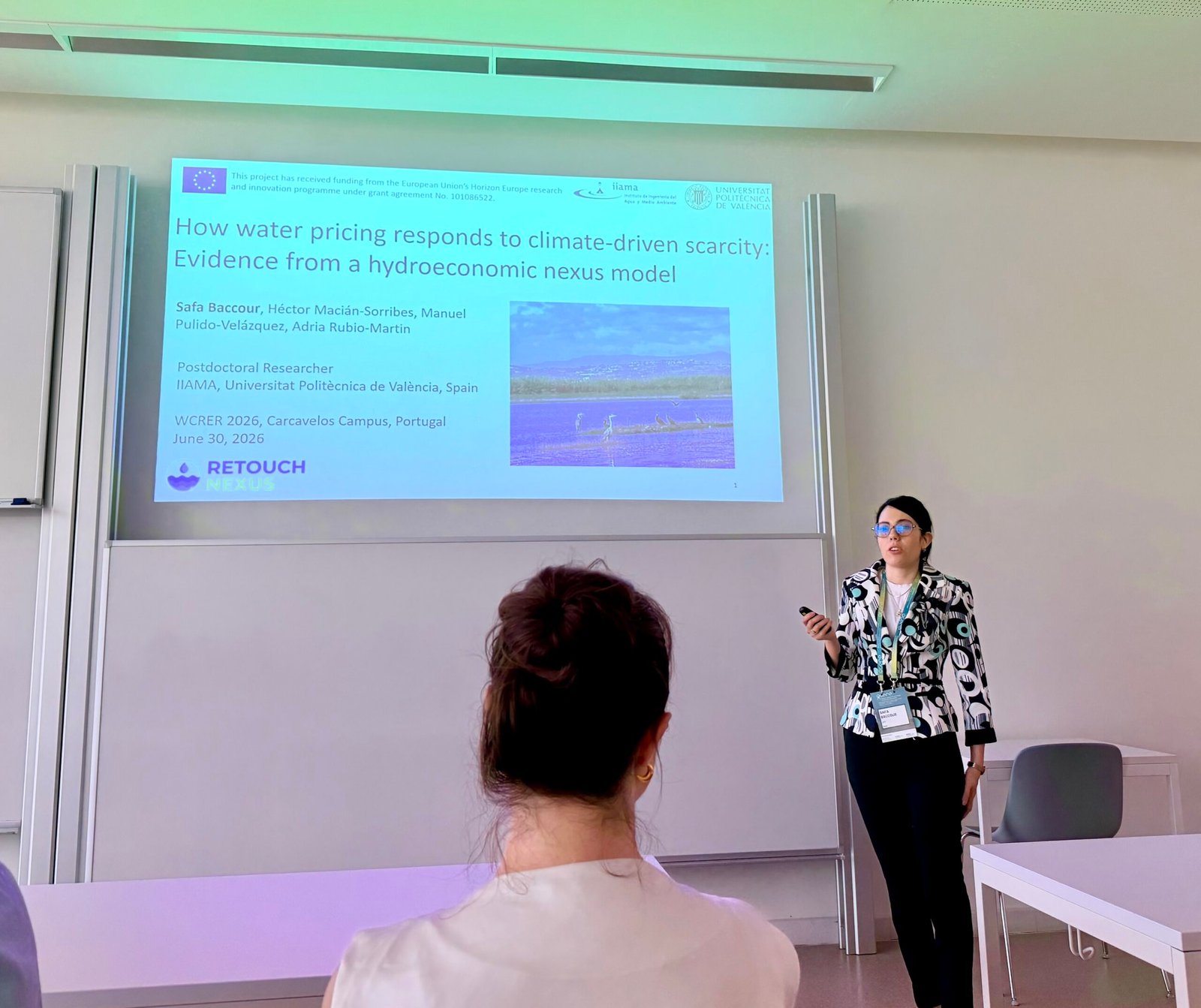
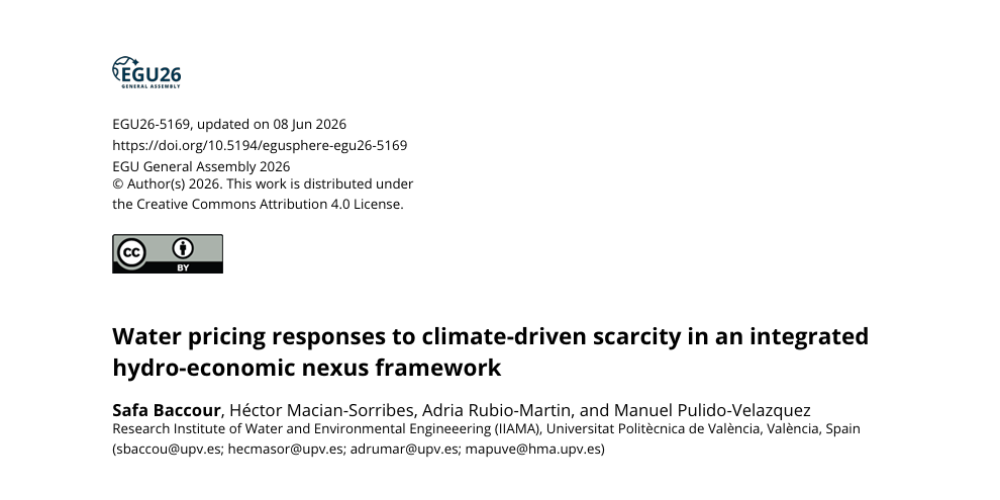
The project was represented by Safa Baccour (UPV), presenting joint work with Héctor Macián-Sorribes, Manuel Pulido-Velázquez, and Adria Rubio-Martín (IIAMA – Universitat Politècnica de València), entitled: “How water pricing responds to climate-driven scarcity: Evidence from a hydro-economic nexus model.” The session was discussed by Sahan Dissanayake (Portland State University).
The presentation tackled a core question for RETOUCH NEXUS: how can water pricing policies reduce unsustainable water use while protecting economic activity and ecosystem health under climate change?
Nexus-Based Modelling for Integrated Water Governance
The research introduces an integrated hydro-economic model (HEM) developed within the Water-Energy-Food-Ecosystems (WEFE) Nexus framework central to RETOUCH NEXUS. The model links biophysical, hydrological, economic, and ecological components, drawing on CMIP6 climate projections, hydrological outputs from TETIS, crop water requirements from AQUACROP, agricultural and energy price projections from CAPRI and PRIMES, and habitat suitability modelling for key fish species. Together, these components enable a systemic assessment of how water pricing shapes allocation, cross-sectoral outcomes, and species resilience under future climate and socio-economic conditions.
Evidence from the Júcar River Basin
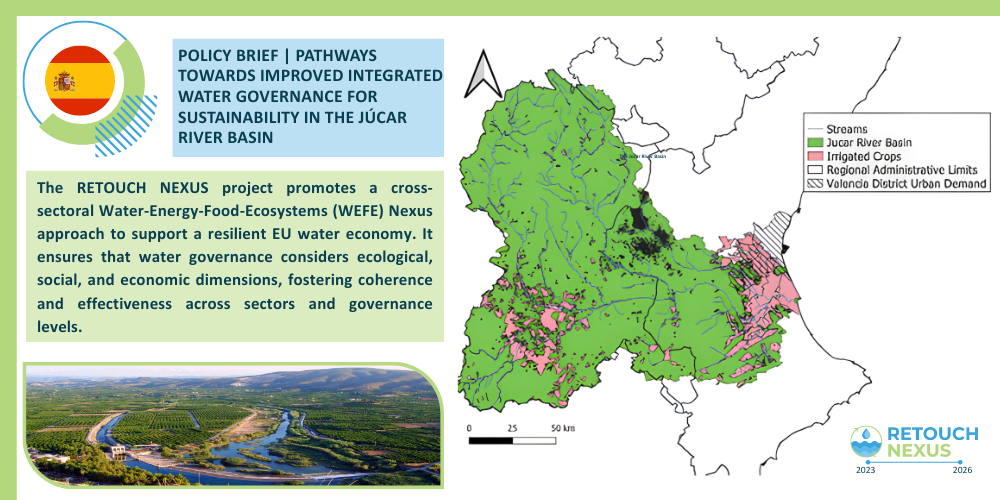
Applied to the Júcar River Basin, one of RETOUCH NEXUS’s case study areas, the study compares uniform and dynamic water pricing strategies, the latter built on a marginal resource opportunity cost (MROC) approach that adjusts prices to scarcity conditions.
The results show that both policies reduce unsustainable water use, improve system efficiency, and enhance ecological resilience by cutting the frequency, duration, and severity of habitat stress below critical thresholds. Uniform pricing delivers the sharpest cuts in withdrawals, around 30%, down to 759 Mm³ under SSP5-8.5 for 2015–2050, compared with a baseline of 1,078 Mm³, but its rigid structure disproportionately affects lower-return activities and water-intensive crops such as cereals, potatoes, and sunflowers. Dynamic pricing achieves a more moderate reduction in withdrawals while better preserving economic performance: herbaceous production falls from 562 MT at baseline to 406 MT under SSP5-8.5, while fruit tree and citrus yields remain largely stable, pointing to a more balanced distribution of impacts across sectors.
Strengthening Nexus-Aligned Water Policies
This contribution provides operational evidence that well-designed, nexus-aligned water tariffs can optimize trade-offs between water, energy, food, and ecosystems, supporting sustainable, inclusive water governance. Participation in WCERE 2026 also strengthened RETOUCH NEXUS’s engagement with the international environmental and resource economics community.
Through this activity, RETOUCH NEXUS continues to demonstrate how science-based, cross-sectoral tools can support more equitable, efficient, and resilient water management in water-stressed basins across Europe and beyond.