
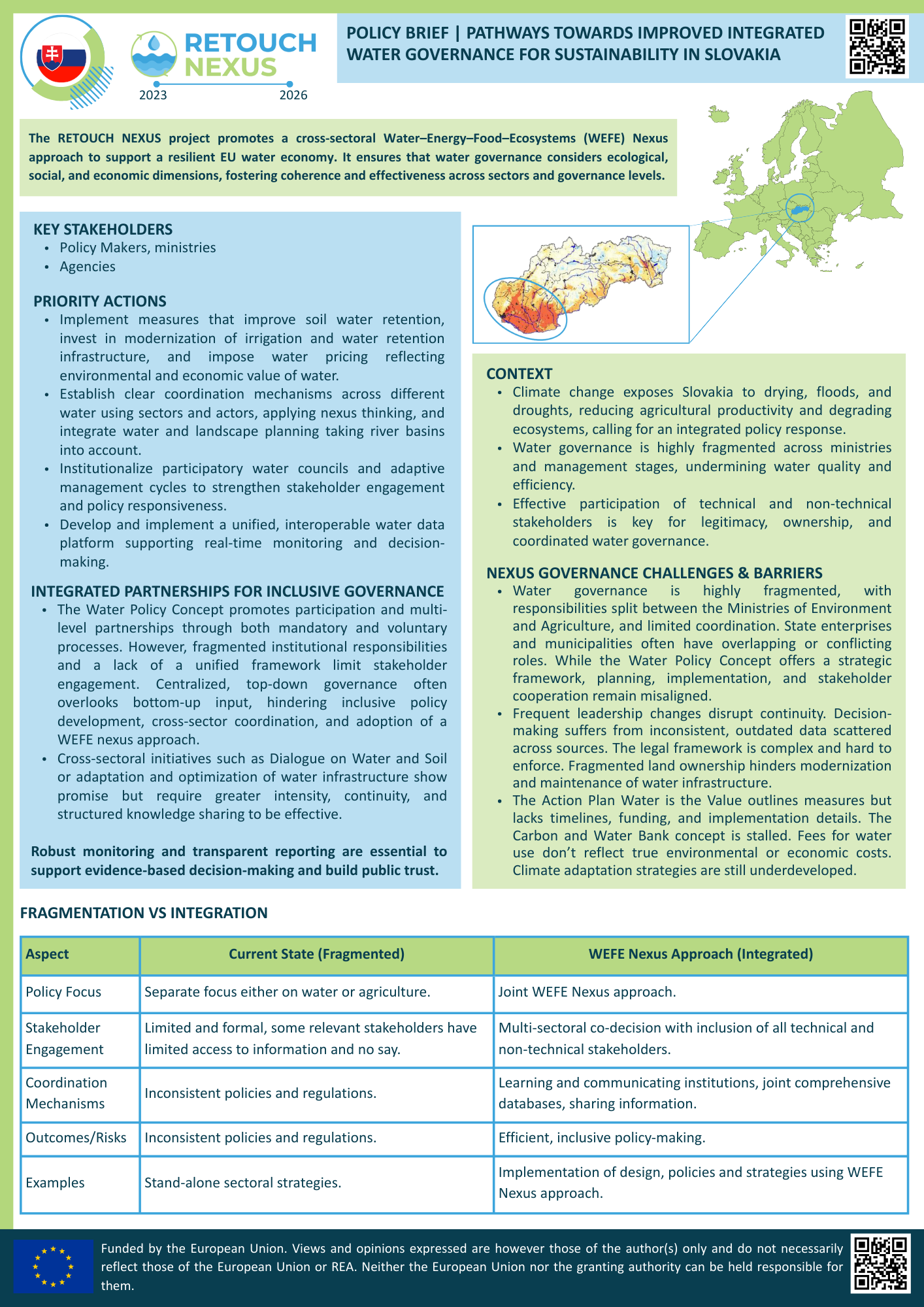
Integrierte Wasserwirtschaft in der Slowakei
Die Slowakei befindet sich an einem kritischen Wendepunkt, da der Klimawandel das Land zunehmenden Dürren, Überschwemmungen und sinkender landwirtschaftlicher Produktivität aussetzt, während sich die Verschlechterung der Ökosysteme beschleunigt. Trotz eines strategischen Konzepts für die Wasserpolitik ist die Governance nach wie vor stark fragmentiert: Die Zuständigkeiten sind zwischen dem Umwelt- und dem Landwirtschaftsministerium aufgeteilt, es gibt nur begrenzte Koordinierungsmechanismen, die Daten sind uneinheitlich und über verschiedene Behörden verstreut, und die komplexen rechtlichen Rahmenbedingungen lassen sich nur schwer durchsetzen. Dieser RETOUCH NEXUS-Policy Brief schlägt einen integrierten Fahrplan für den Wandel vor und fordert koordinierte Ansätze, die die Wasserbewirtschaftung mit Landwirtschaft, Umweltschutz und Raumplanung auf nationaler, regionaler und lokaler Ebene durch den Wasser-Energie-Nahrungsmittel-Ökosystem-Nexus-Rahmen verknüpfen.
Kernbotschaften
1
Zersplitterung beeinträchtigt eine effektive Verwaltung: Die Wasserbewirtschaftung ist auf verschiedene Ministerien und Verwaltungsebenen verteilt, wobei die Koordinierung unzureichend ist, die Daten veraltet und verstreut sind, die rechtlichen Rahmenbedingungen komplex sind und Lücken bei der Umsetzung bestehen. Dem Aktionsplan „Wasser ist der Wert“ fehlen Zeitpläne und Finanzmittel, während die Wassergebühren die tatsächlichen Umweltkosten nicht widerspiegeln.
2
Eine Koordinierung auf mehreren Ebenen ist unerlässlich: Erfolg erfordert Maßnahmen auf nationaler Ebene (umfassende sektorübergreifende Strategie, straffere Verwaltungsstrukturen, einheitliche Datenplattform), auf regionaler Ebene (Planung auf der Ebene der Flussgebiete, verstärkte Kommunikation zwischen den Interessengruppen) und auf lokaler Ebene (verstärkte partizipative Entscheidungsfindung, regelmäßiger Dialog zwischen den Akteuren des Nexus).
3
Wirtschaftliche Instrumente sorgen für eine effiziente Ressourcenallokation: Wasserpreise, die den ökologischen und wirtschaftlichen Wert widerspiegeln, Subventionen für Wasserrückhaltung und regenerative Landwirtschaft, gestaffelte Tarife, die die Knappheit widerspiegeln, sowie handelbare Genehmigungen können Anreize für nachhaltige Praktiken schaffen und gleichzeitig Einnahmen für Systemverbesserungen generieren.
4
Die Flussgebietsplanung integriert die Landschaftspflege: Die Nutzung von Wassereinzugsgebieten und Flussgebietseinheiten als primäre Rahmenbedingungen für eine integrierte Wasser- und Landnutzungsplanung fördert ein ökosystembasiertes Management und ermöglicht eine effektive sektorübergreifende Koordination auf geeigneten Ebenen.
5
Partizipative Regierungsführung schafft Legitimität: Der Übergang von der reinen Konsultation zu einer echten Mitbestimmung durch institutionalisierte Wasserräte und adaptive Managementzyklen stärkt die Einbindung der Interessengruppen, stellt sicher, dass vielfältige Stimmen die Politik mitgestalten, und verbessert die Umsetzung und Einhaltung der Vorschriften.
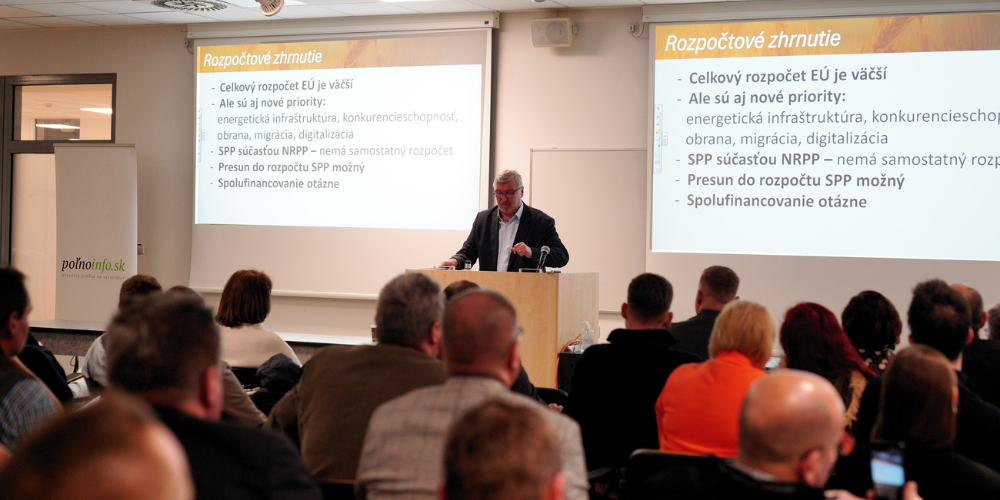
Experts Convene to Shape Slovakia’s Agricultural Future: Workshop on New EU CAP 2028–2034
Over 200 stakeholders gathered at the Slovak University of Agriculture in Nitra on February 5,…
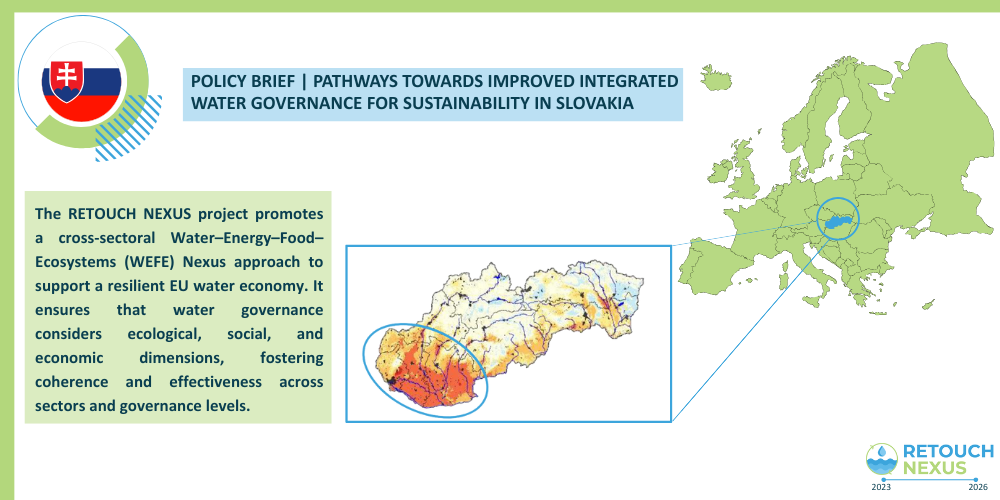
Neuer Policy Brief: Wege zu einer verbesserten integrierten Wasserbewirtschaftung in der Slowakei
Integrated Water Governance in Slovakia Slovakia stands at a critical juncture as climate change exposes…
RETOUCH NEXUS at SEAM 2025 – Advancing Water-Energy-Food-Ecosystem Governance in Slovakia
Nitra, Slovakia | September 11-12, 2025 The RETOUCH NEXUS project is proud to participate in…
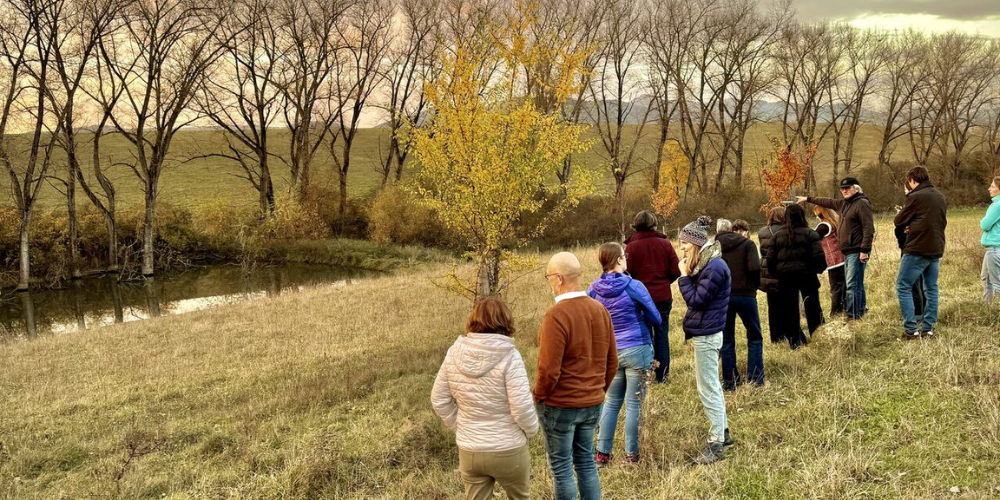
RETOUCH NEXUS at the Slovak Water Tour 2024: Advancing Nature-Based Solutions for Resilient Water Management
From October 28 to 31, 2024, the Slovak Water Tour brought together experts from across…
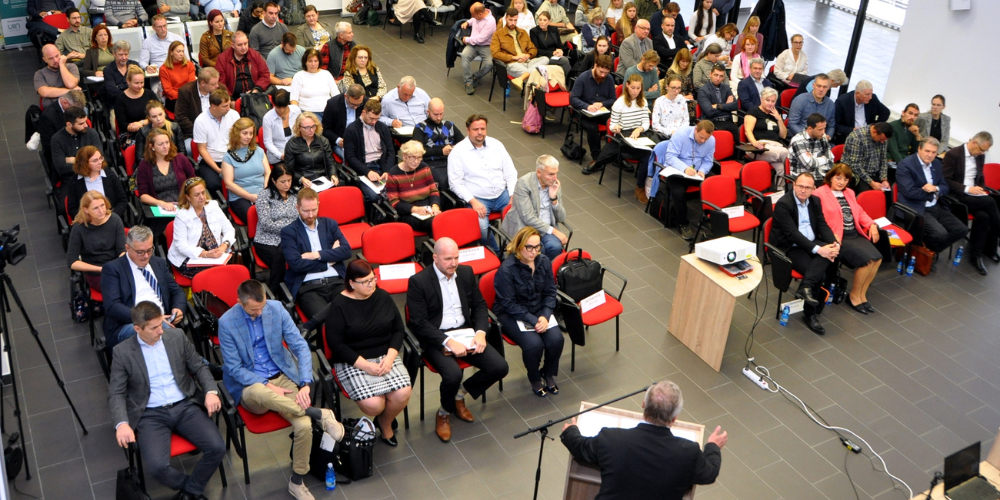
Second Workshop Organized by SUA: Enhancing Inclusive Stakeholder Engagement!
The RETOUCH NEXUS project recently celebrated a significant milestone with the successful hosting of its…
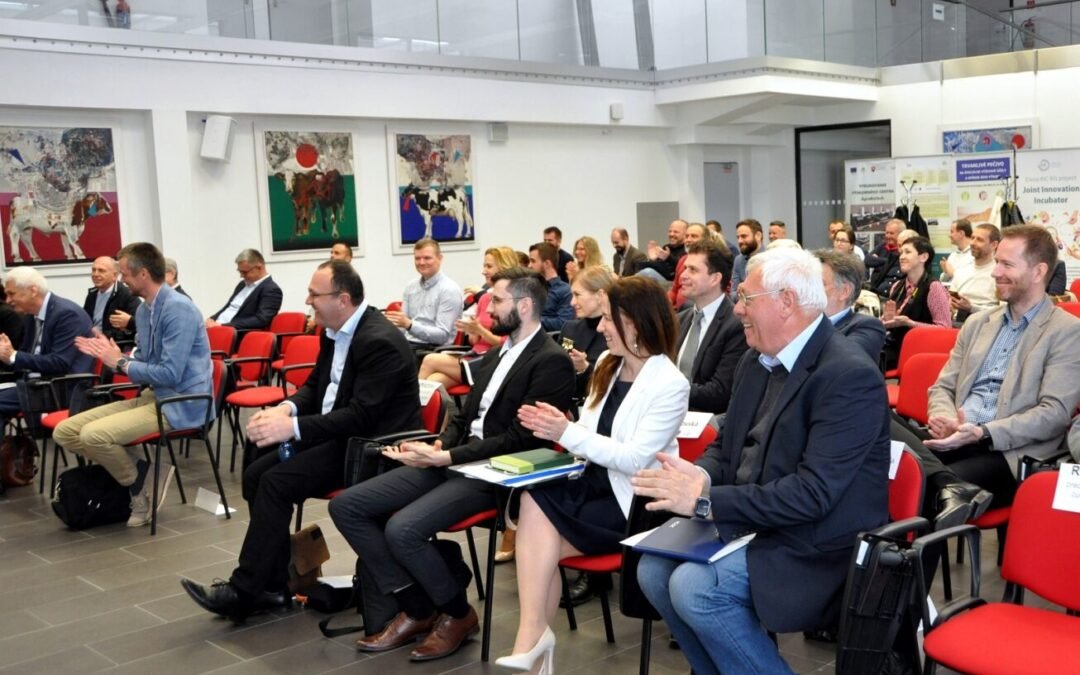
The Slovak case study of the RETOUCH NEXUS project held its first stakeholder workshop on climate-resilient water management for agriculture, citizens and ecosystems!
The Slovak case study of the RETOUCH NEXUS project recently hosted its inaugural stakeholder workshop,…
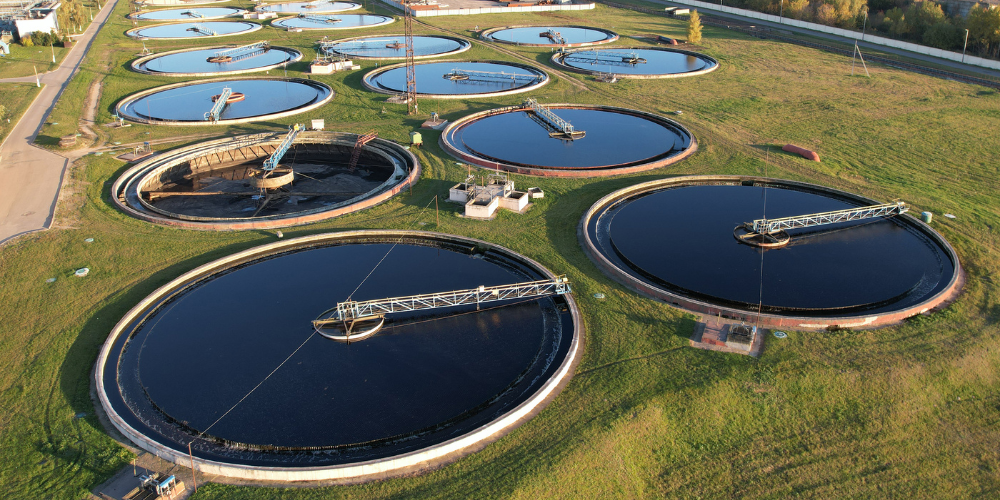
Establishing a baseline to characterise each RETOUCH NEXUS case study
Last September, our project completed two tasks aimed at exploring water governance models, institutional frameworks…