
We’re proud to spotlight the latest publication from our partner Erik Ansink (Vrije Universiteit Amsterdam), co-authored with Jens Gudmundsson and Jens Leth Hougaard (both University of Copenhagen), just published in The Scandinavian Journal of Economics: “Shifting the reference point in environmental regulation: from polluter-pays to beneficiaries-compensate.”
The paper tackles a problem that sits at the heart of environmental policy: the “polluter-pays” principle is ethically appealing, but it depends on being able to detect and price emissions, something that is often prohibitively difficult in practice, from agricultural runoff to transboundary air pollution. When emissions can’t be reliably monitored, how can efficient abatement still be achieved?
The core idea: beneficiaries-compensate (BC)
Instead of trying to price pollution, the authors flip the reference point. Rather than requiring polluters to pay for the harm they cause, their beneficiaries-compensate (BC) scheme asks the parties who benefit from someone else’s abatement to compensate them for it. Crucially, this shifts the burden of proof: instead of monitoring emissions, the system only needs to verify that abatement, a discrete, often physical action like a reforestation project or a water treatment upgrade, actually took place.
The authors show this isn’t just an intuitive fix. Using formal game-theoretic and axiomatic tools, they prove that:
- BC is the only transfer scheme that induces efficient abatement as a dominant strategy for every party, guarantees no one loses money by participating, and keeps the system financially balanced (Theorem 1).
- BC is also the unique scheme that satisfies a set of classical fairness principles, equal treatment of equals, invariance to how the group of parties is defined, and consistency when abatement generates multiple types of benefit (Theorem 2).
In other words, from two entirely different starting points, one about incentives, one about fairness, the same solution emerges.
From theory to practice: international agreements and smart contracts
The paper doesn’t stop at the theory. The authors show how BC transfers can be embedded directly into international environmental agreements as a way of decentralizing how a coalition of signatories shares the cost of joint abatement, without needing a central enforcer.
They then go a step further, sketching how blockchain-based smart contracts could implement BC transfers in the real world, using cryptographic commitments to handle simultaneous decision-making and automated transfers that resolve the classic “who pays first” trust problem between abaters and beneficiaries. It’s a compelling glimpse of decentralized environmental governance: verifiable abatement actions, feeding into transparent, self-executing compensation rules, with no central authority required.
Why it matters
The broader message is a simple but powerful one: when monitoring and enforcement are scarce, place the incentives where verification is feasible. For hard-to-monitor environmental problems, diffuse pollution, transboundary agreements, carbon removal, moving from “polluter pays” to “beneficiaries compensate” isn’t a compromise. It can be a practical route to genuinely efficient outcomes.
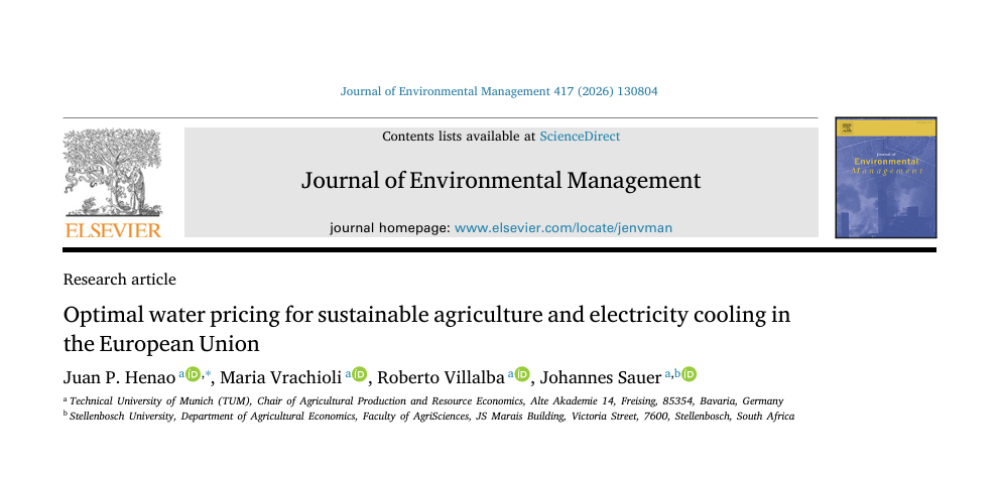
New Publication: Optimal Water Pricing for Sustainable Agriculture and Electricity Cooling in the European Union
How can water pricing contribute to more sustainable and efficient water allocation across Europe? A new scientific publication from the…
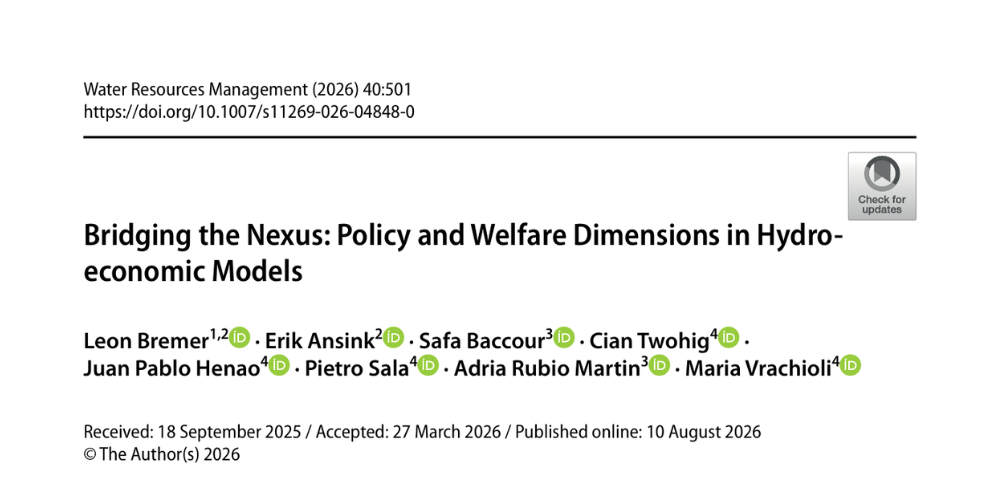
New Publication – Bridging the Nexus: Policy and Welfare Dimensions in Hydro-economic Models
How can water policies better account for the complex interconnections between water, energy, food and ecosystems? A new scientific publication…
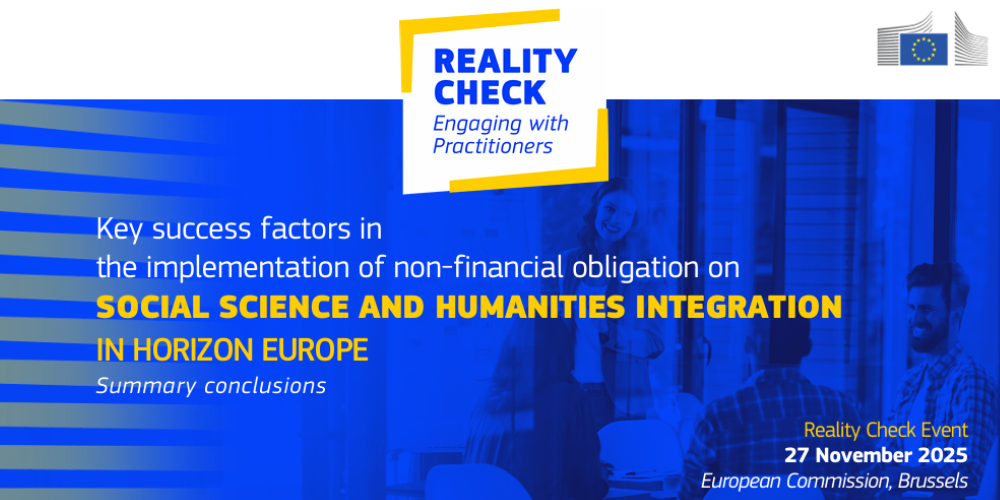
RETOUCH NEXUS Contributes to the Horizon Europe Reality Check on SHH Integration
On 27 November 2025, the European Commission's DG RTD organised the Reality Check on "Key success factors in the implementation…
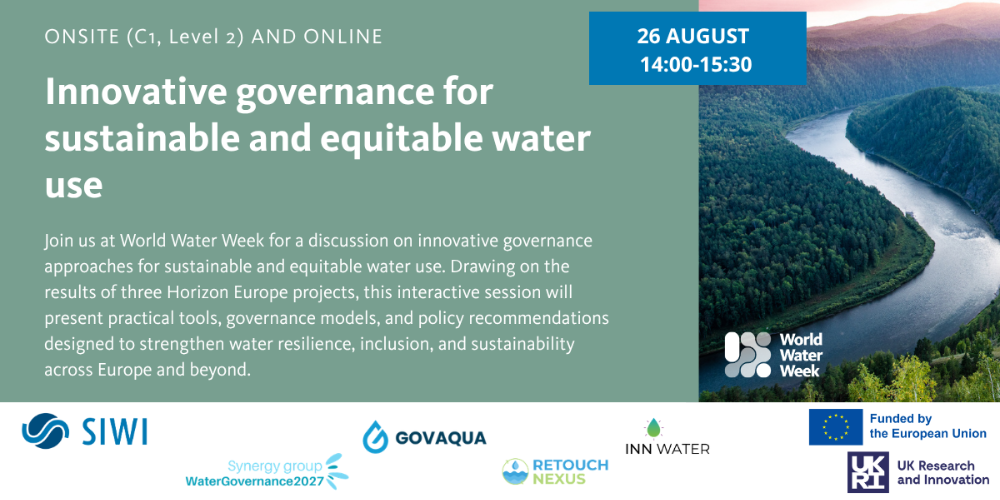
RETOUCH NEXUS at World Water Week 2026: Advancing Innovative Water Governance
Stockholm, Sweden – 23-27 August 2026 RETOUCH NEXUS is proud have participated in the World Water Week 2026, the leading…
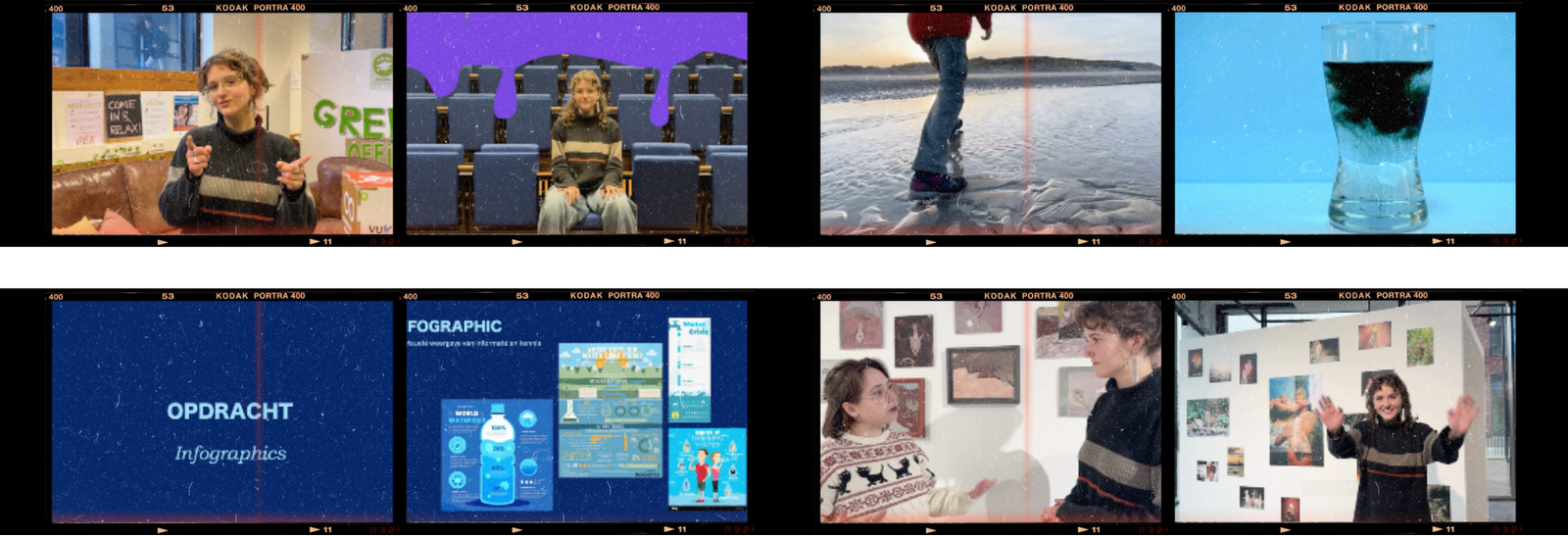
What Lives Beneath the Surface? Youth Voices on Interconnected Water Problems, Through Art and Media
A collaboration between X11 (Media, Design & Technology high school, Utrecht) and the Dutch case study of the RETOUCH project,…
New Research: A Market-Based Alternative to “Polluter Pays” – Powered by Smart Contracts
We're proud to spotlight the latest publication from our partner Erik Ansink (Vrije Universiteit Amsterdam), co-authored with Jens Gudmundsson and…
How Should Water Be Priced in a Changing Climate? Safa Baccour Presents New Findings at EGU 2026
Research from the IIAMA institute explores how uniform and dynamic water pricing strategies can reduce unsustainable withdrawals, protect ecosystems, and…
New Policy Brief: Drought-Adaptation Packages
Farmer-Centred Drought Policy in Noord-Holland Despite increasing water scarcity, farmer investment in drought adaptation in the Netherlands has remained limited,…
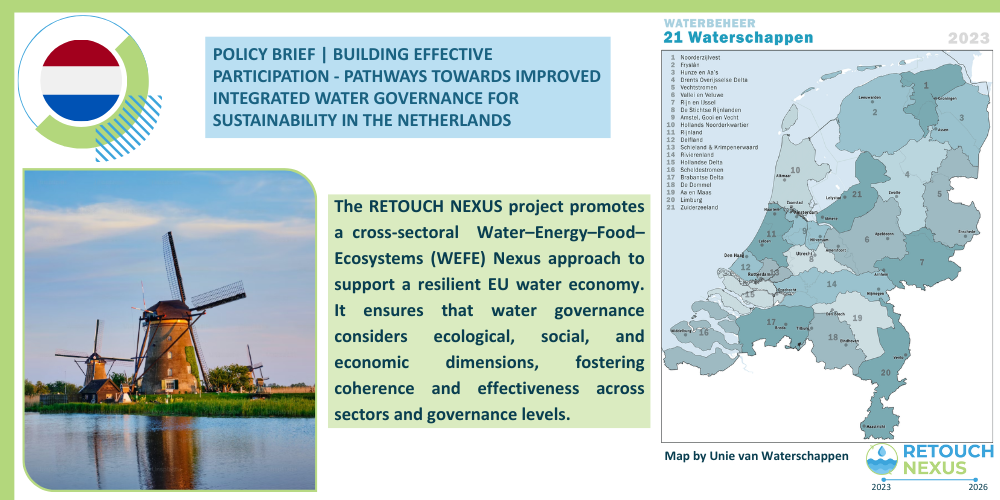
Nuevo informe de políticas: Fomento de una participación eficaz en la gobernanza del agua en los Países Bajos
Integrated Water Governance in the Netherlands The Netherlands faces increasingly complex water challenges driven by climate change, polluted waterways, soil…
Informative evening for HHNK’s Freshwater Availability Programme
On Thursday, 11 September, the water authority Hoogheemraadschap Hollands Noorderkwartier (HHNK) held an information evening as part of the public…