
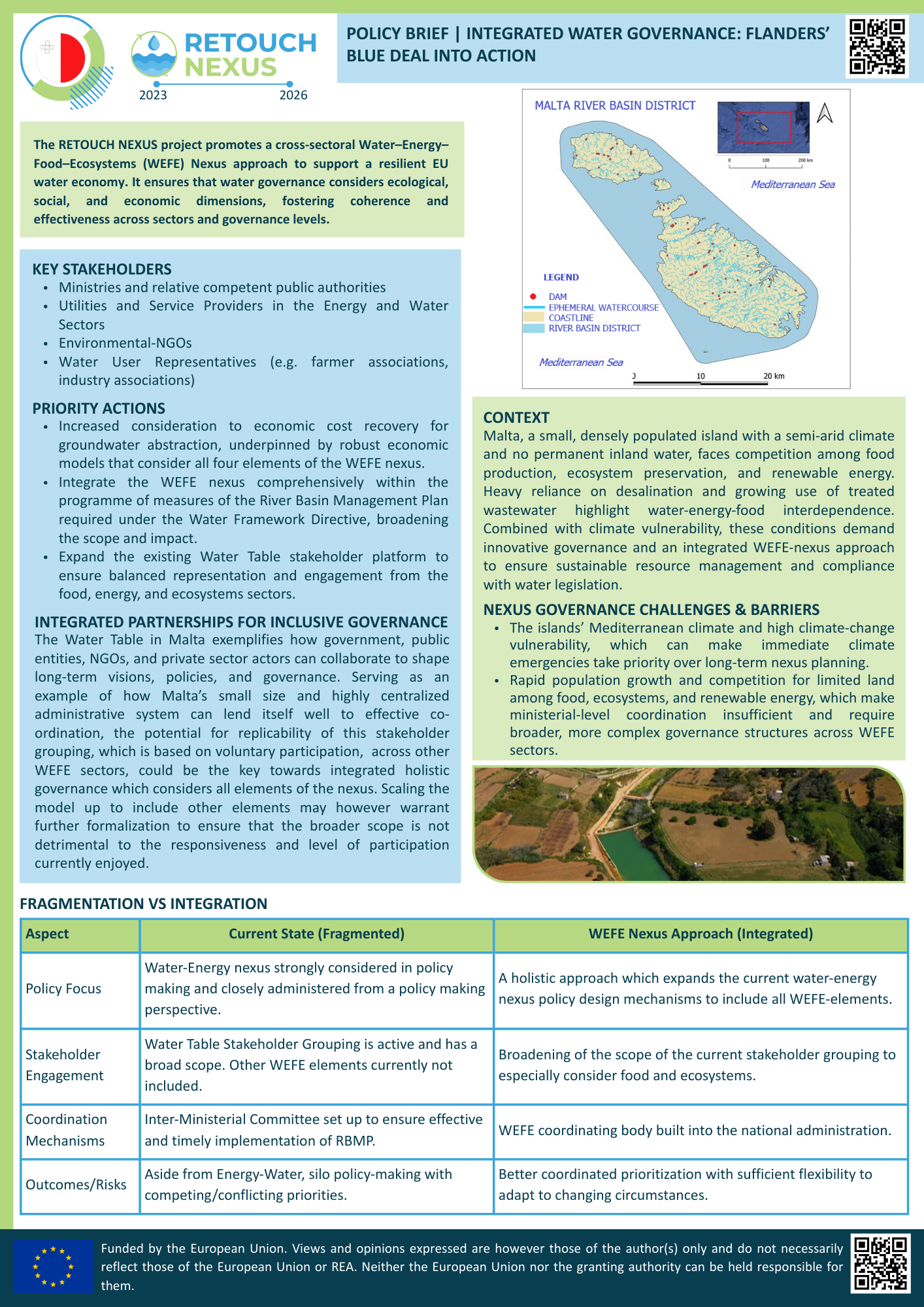
Gobernanza integrada del agua en Flandes
Malta confronts unique water governance challenges as a small, densely populated Mediterranean island with no permanent inland water sources, relying heavily on energy-intensive desalination and increasingly on treated wastewater for agriculture. This creates fundamental water-energy interdependence while rapid population growth and dense development intensify competition for limited land among food production, ecosystem preservation, and renewable energy infrastructure. This RETOUCH NEXUS policy brief examines how Malta can build on its successful water-energy coordination and the collaborative Water Table stakeholder platform to expand integration across the full Water-Energy-Food-Ecosystems nexus, leveraging the nation’s small size and centralized governance as advantages rather than constraints in pioneering holistic resource management.
Mensajes clave
1
Build on water-energy coordination success: Malta has made significant progress with strong policy coordination between water and energy authorities. The challenge now is systematically expanding this integration to encompass food and ecosystem dimensions, creating truly holistic WEFE nexus governance rather than continued sectoral silos.
2
Scale the Water Table model across all nexus elements: This voluntary stakeholder platform demonstrates that effective multi-stakeholder dialogue is achievable. Broadening membership to ensure balanced representation from food, energy, and ecosystem sectors, while maintaining current responsiveness and participation levels, could unlock integrated governance that Malta’s resource constraints demand.
3
Water pricing must reflect full nexus value: Increasing economic cost recovery for groundwater abstraction using robust models that consider all four WEFE elements ensures pricing reflects environmental and opportunity costs across sectors, driving efficient use and generating revenue for sustainable management.
4
Mainstream WEFE into all policy development: Policymaking should systematically account for nexus impacts and linkages through assessment tools, with the River Basin Management Plan’s programme of measures comprehensively addressing energy, food, and ecosystem dimensions alongside water management requirements.
5
Small size enables rapid coordination: Malta’s centralized administrative system allows coordination through direct dialogue that would require complex multi-level negotiations in larger countries. This advantage, combined with existing stakeholder engagement success, positions Malta to pioneer integrated WEFE governance approaches despite extreme resource constraints.
New Policy Brief: Water and Energy Sustainability in Small Island Economies
Water-Energy Interdependence in Malta Malta faces significant water scarcity compared to other EU member states,…
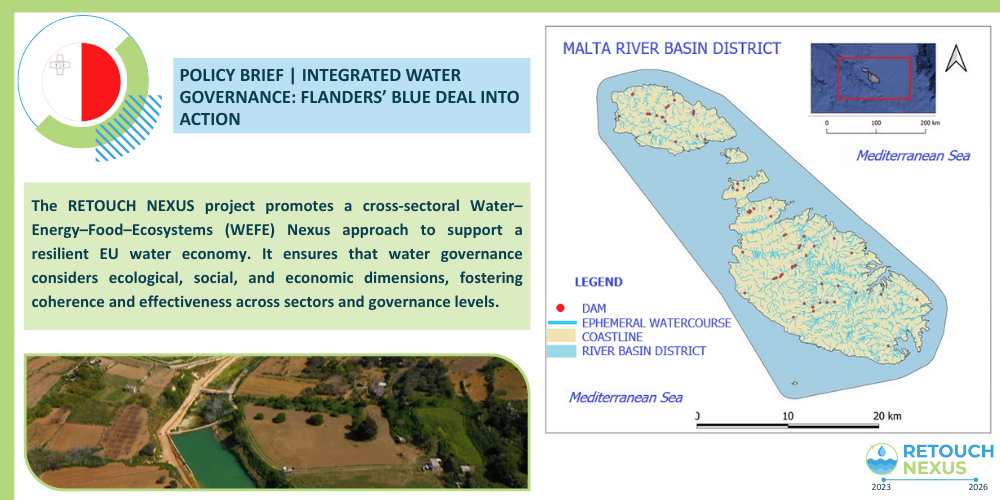
New Policy Brief: Pathways Towards Improved Integrated Water Governance in Malta
Integrated Water Governance in Flanders Malta confronts unique water governance challenges as a small, densely…
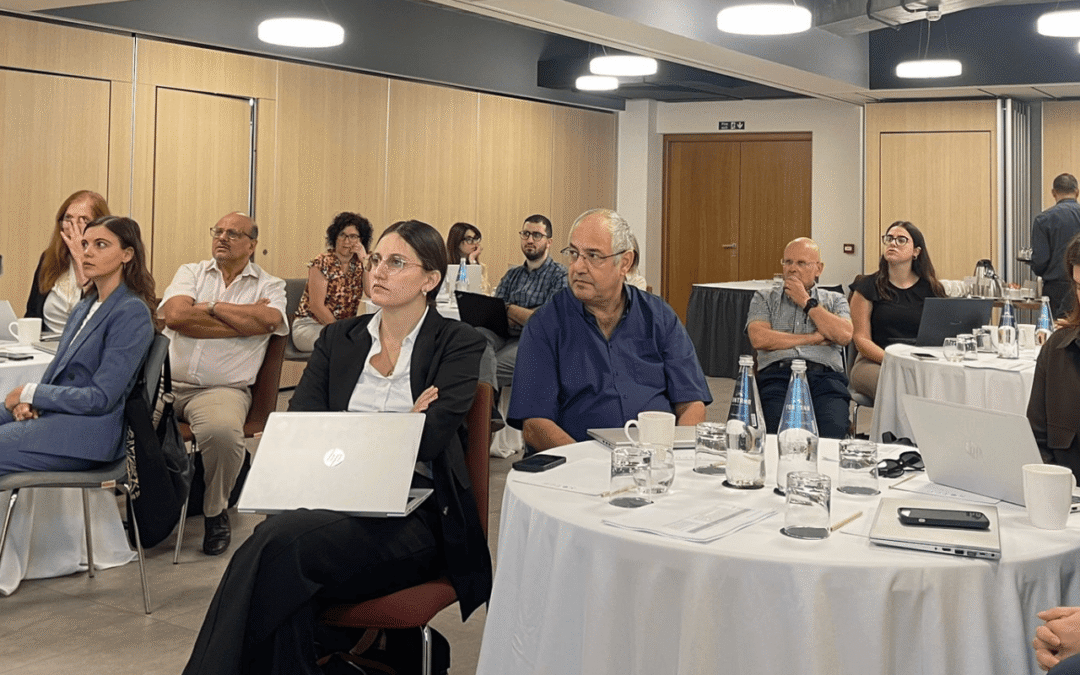
💧 Strengthening Stakeholder Engagement in Malta – RETOUCH NEXUS Workshop on the WEFE Nexus Ranking System
In October 2025, the Energy and Water Agency (EWA) hosted a new RETOUCH NEXUS Stakeholder…

Promoting Collaboration : Highlights from the 4th Maltese Stakeholder Engagement Meeting!
We are thrilled to announce the successful conclusion of the 4th Stakeholder Engagement Meeting for…
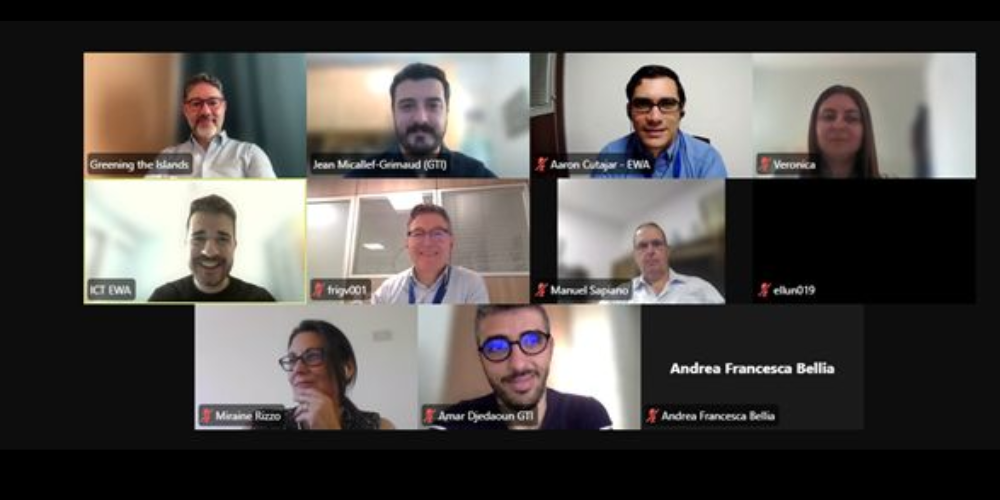
The Maltese case study of the RETOUCH NEXUS project held its Third stakeholder engagement workshop!
Our Maltese case-study leader, The Energy and Water Agency held its third Stakeholder Engagement Workshop…
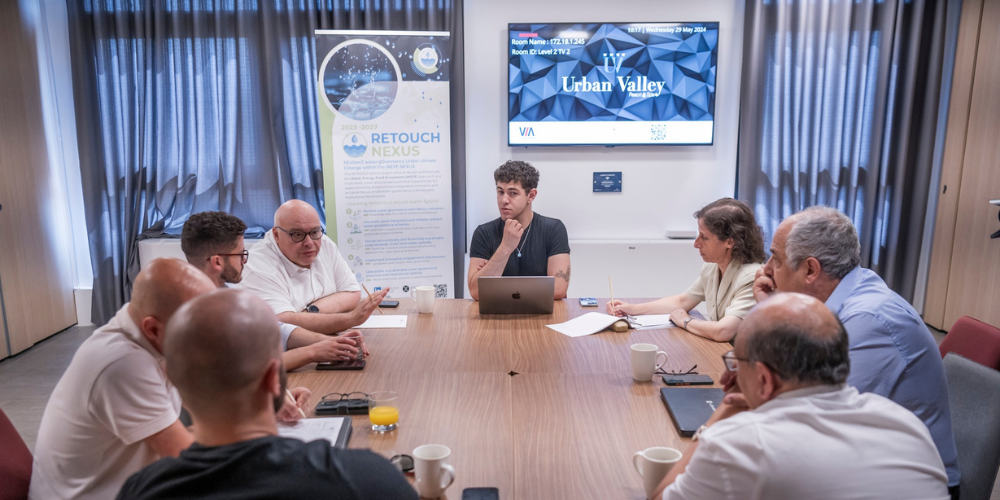
The Maltese case study of the RETOUCH NEXUS project held its Second stakeholder engagement workshop!
Our Maltese case study leader, The Energy and Water Agency was more than excited to…
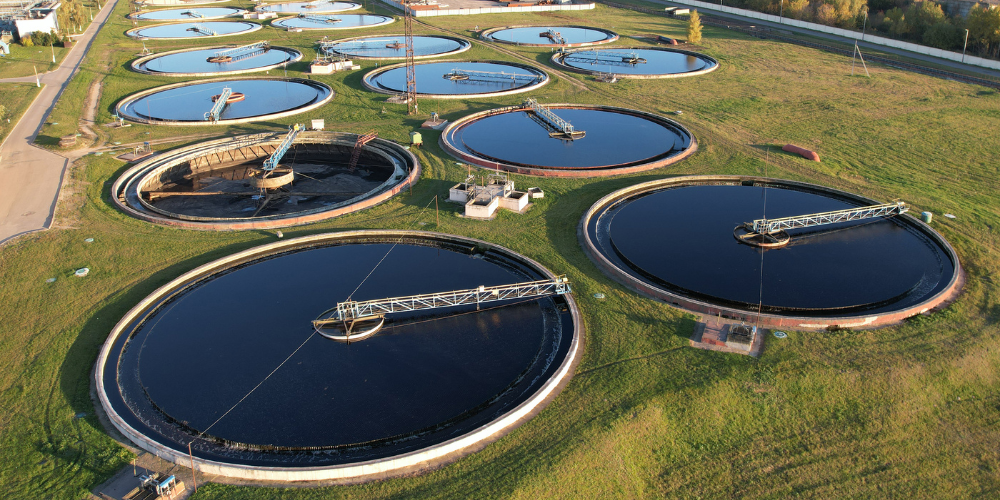
Establishing a baseline to characterise each RETOUCH NEXUS case study
Last September, our project completed two tasks aimed at exploring water governance models, institutional frameworks…
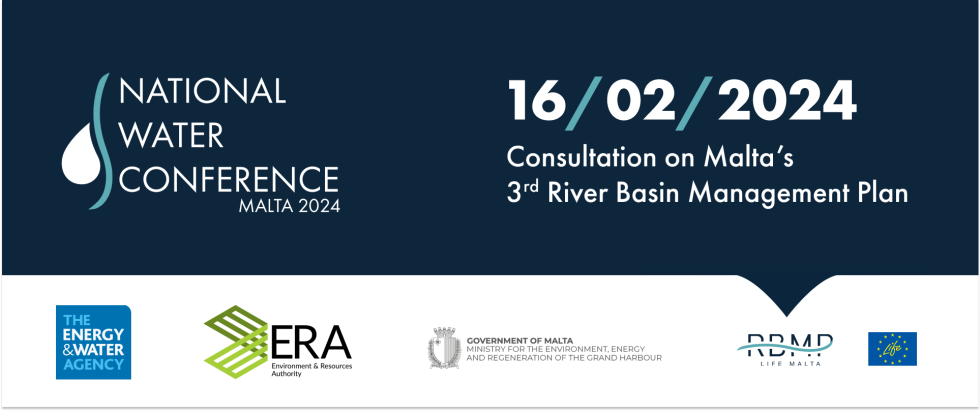
RETOUCH Nexus Unveiled at Malta’s First National Water Conference
Malta hosted its inaugural National Water Conference on Friday, February 16, 2024, marking a significant…

Let’s meet around breaksfast to discover the Maltese case study!
The Energy and Water Agency (EWA) recently launched the stakeholder engagement process for the RETOUCH…