
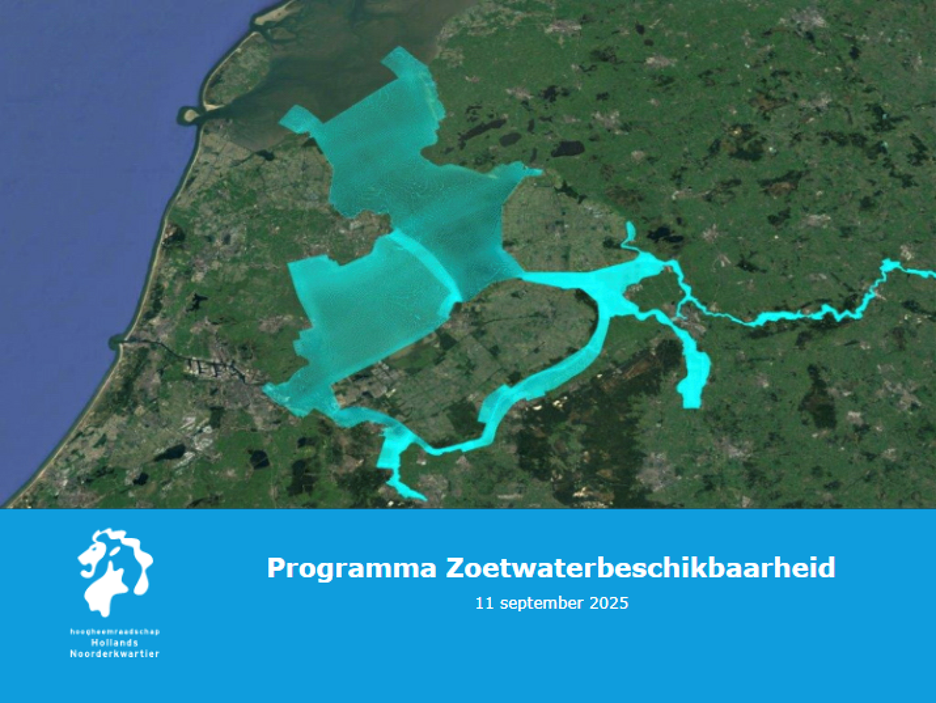
On Thursday, 11 September, the water authority Hoogheemraadschap Hollands Noorderkwartier (HHNK) held an information evening as part of the public inspection period for the Freshwater Availability Programme Plan. The respective programme plan is currently in its formal adoption process, and content-wise outlines the key issue-areas and ambitions, the intended approach, and the priority actions for safeguarding freshwater availability over the next eight years.
This formal review process enables citizens to exercise their right to inspect and comment on the water authority’s implementation plans. It is because of this, therefore, that HHNK organised an information session where residents and other interested parties could gather background information, ask questions, and form a clearer understanding of the proposals. HHNK aims at facilitating residents’ right to inspect and comment on the water authority’s implementation plans.
Historically shared waterways
Dutch water authorities such as HHNK are among the oldest democratic institutions, with their origins dating back to the 13th century when local communities sought collective solutions for water management and flood protection. Today, the governmental authorities operate under a democratically elected general board of 30 members, re-chosen every four years to represent regional residents via political parties. Consequently, the general board chooses the consequential role of the executive board, consisting of the dike-reeve (chairperson) and five hoogheemraden (deputies). This smaller group of people is responsible for day-to-day management, such as implementing policy and preparing meetings and reports to the general board. From this head structure, the rest of the governmental body ramifies into specialised departments that bring together experts such as data analysts or policy makers, forming a ferry between water, society, and politics.
Altogether, within this governmental structure, the water authorities strive to keep policy and operational decisions both representative and accountable. These foundations permeate at HHNK’s activities and become visible in events such as the 11 September information evening.
Freshwater availability: Balancing water supply and demand
The draft programme sets out how HHNK aims to prepare the regional water system and its inhabitants for increasing pressure on freshwater resources. Freshwater availability, its balance between supply and demand, is under strain from multiple drivers, including rising salinity caused by sea-level rise. To prevent the risk of future water shortages from increasing, the task facing Hollands Noorderkwartier amounts to roughly 45 % of the current water demand during the driest period. This task consists of three main aspects, each accounting for about an equal share: maintaining water levels within the water system, supplying agriculture for irrigation and combating salinisation, and meeting new water demands arising in particular from the potential rewetting of peat meadow areas.
HHNK’s overarching ambition is therefore to ensure that, by 2050, the region will be resilient to water scarcity, especially in increasing periods of droughts as clearly experienced in the last summers. The authority has committed to maintaining the current balance in the water system and to informing policies and measures for the major water users through timely, structured, and participatory bundled actions. For a systematic approach, the programme divides itself into four key themes:
- Groundwater resources
- Salinisation
- Peatland areas
- Water supply and demand
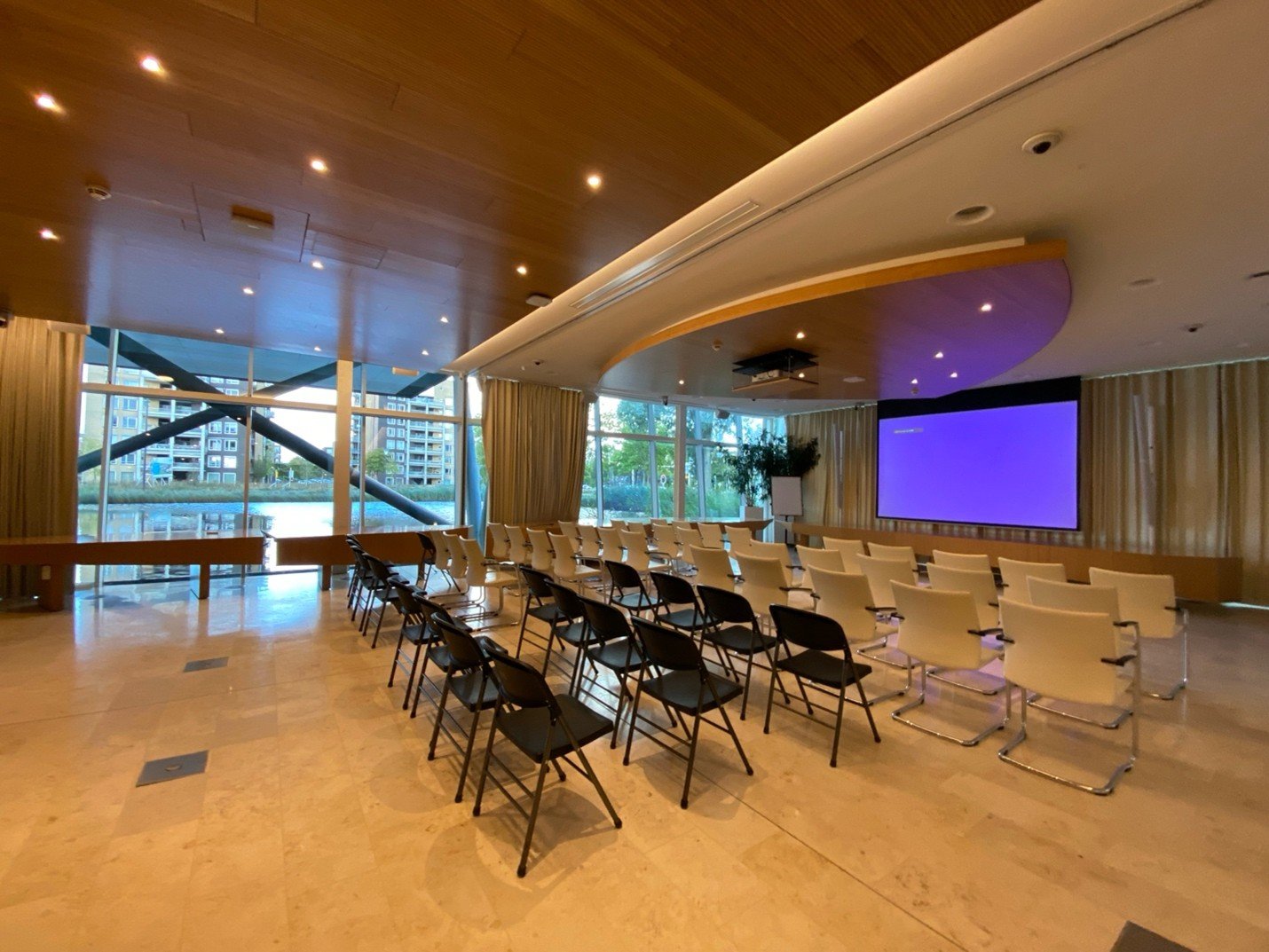
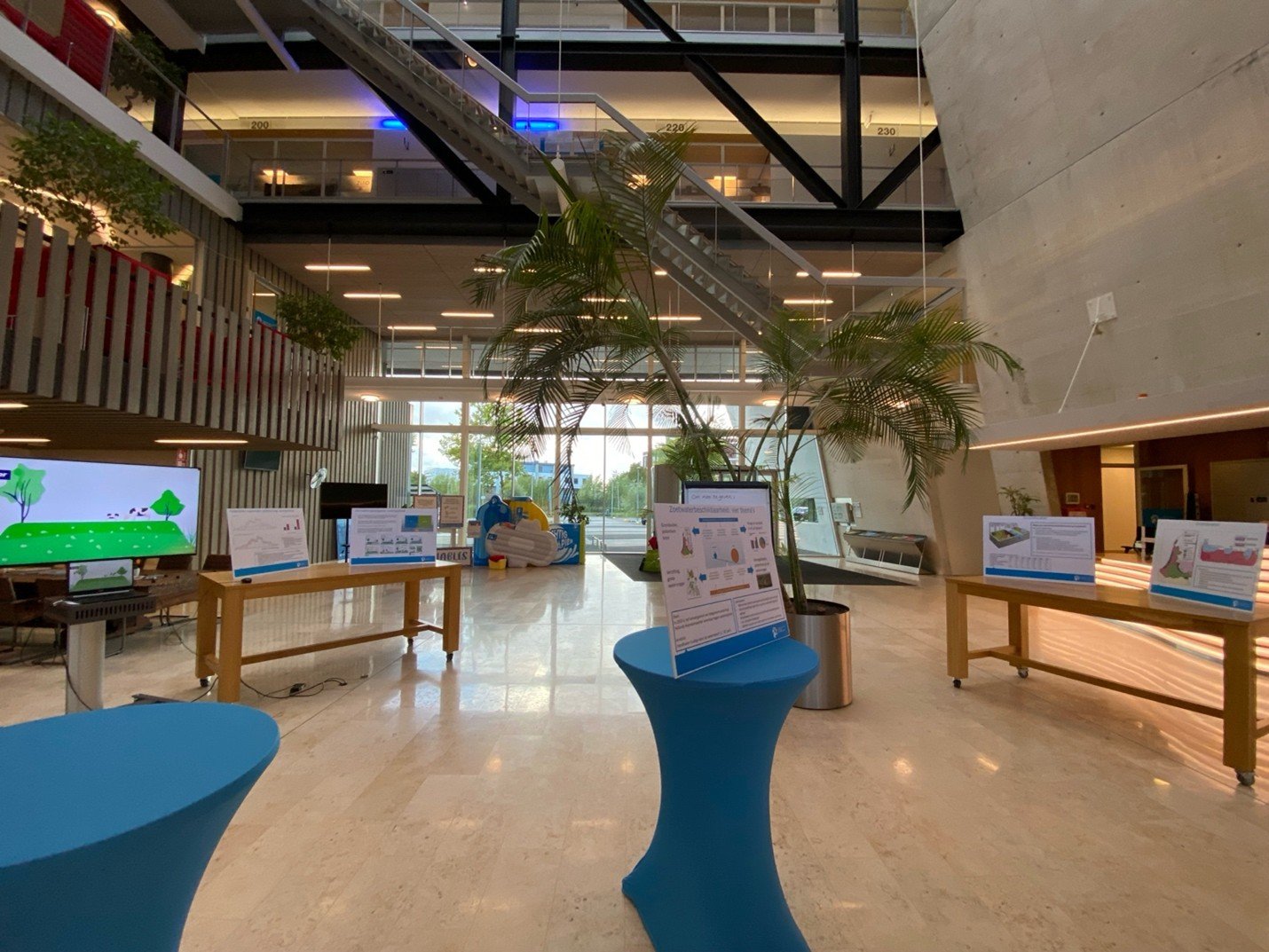
Everyone was welcome to attend the event, which took place in Heerhugowaard. The room streamed full of locals, interested residents and farmers, who share and represent the strong concern for freshwater and its links to land use, crop production, and livestock. Questions arose about the implications of future developments and the uncertainties they bring. These were taken up by the water authority, and through a presentation, programme manager Cecilia van Dalen outlined the complex challenges and the plans to address them. She emphasised that “the programme aims to postpone water shortages as long as possible” and that HHNK cannot achieve this without the active involvement of all concerned and affected parties. After the general presentation, the Freshwater Availability team, subject-matter experts for each theme, facilitated thematic tables where participants could seek clarification on the programme’s details.
Clara Luxardo, case study leader of the RETOUCH Nexus project and researcher at Vrije Universiteit Amsterdam, attended the information evening. Here, she observed how administrative–participatory processes occur in the early stages of sensitive water policy decisions. To her, the event presented the democratic values of a water authority manifested in practice, opening its doors and creating spaces to reach out beyond its own office walls. Sustainable and resilient water governance is not a task that comes without the other.
Our Dutch Case Study activities:



How Should Water Be Priced Under Climate Scarcity? RETOUCH NEXUS at WCERE 2026
RETOUCH NEXUS was represented at the 7th World Congress of Environmental and Resource Economists (WCERE 2026), held from 29 June…
How Should Water Be Priced in a Changing Climate? Safa Baccour Presents New Findings at EGU 2026
Research from the IIAMA institute explores how uniform and dynamic water pricing strategies can reduce unsustainable withdrawals, protect ecosystems, and…
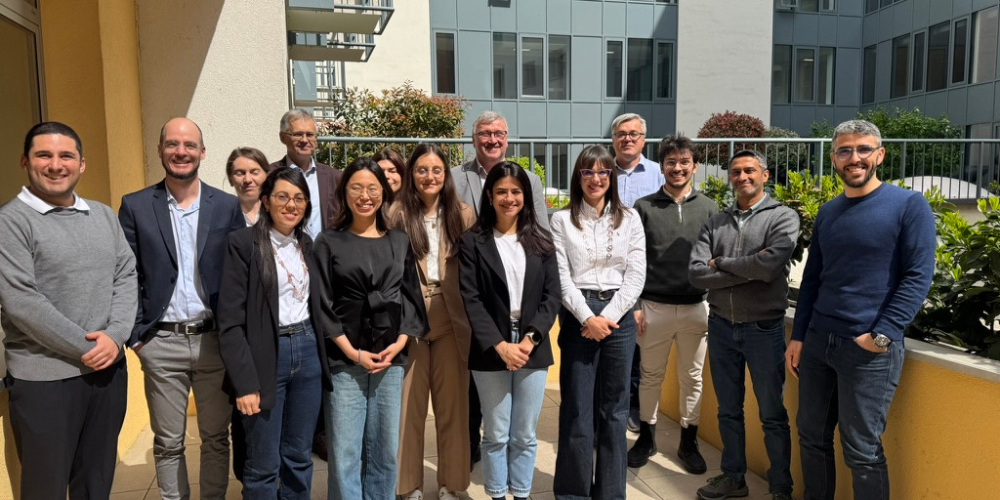
RETOUCH NEXUS 6th General Assembly – Aligning for the Final Stretch
As we enter the final phase of the RETOUCH NEXUS project, our consortium gathered in Bratislava on April 20–21, 2026…

Check out the 6th RETOUCH NEXUS newsletter!
Are you passionate about sustainable water management and governance? 🌍💧 Subscribe to our newsletter and stay updated with the latest…
Pricing Water to Protect Nature: Our Partner Safa Baccour Presents at the International Conference on Climate Impacts in a Changing World 2026
We are proud to highlight the participation of our partner Safa Baccour from the Universitat Politècnica de València (UPV) at…
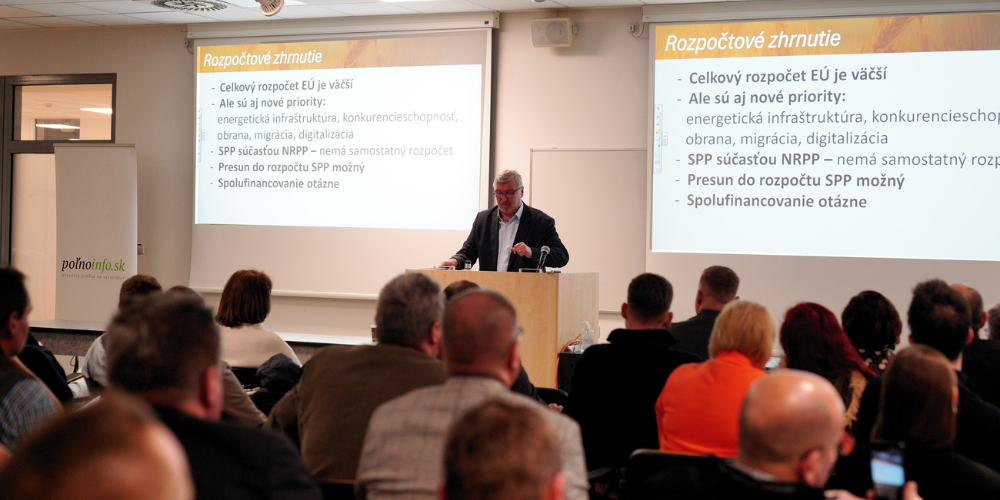
Experts Convene to Shape Slovakia’s Agricultural Future: Workshop on New EU CAP 2028–2034
Over 200 stakeholders gathered at the Slovak University of Agriculture in Nitra on February 5, 2026, for a landmark workshop…
New Policy Brief: What “Nexus”? Towards Resource Nexus Standardization
Defining and Standardizing the Resource Nexus Despite growing recognition in academic and policy circles, the "Nexus" concept has long suffered…
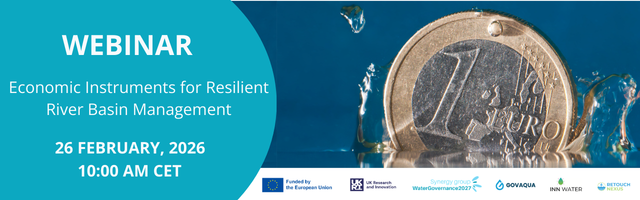
Building Resilience: Economic Instruments for Sustainable River Basin Management
Online – February 26, 2026 On 26 February 2026, the RETOUCH NEXUS project took part in the webinar "Economic Instruments for Resilient River Basin Management," organised as part of the…
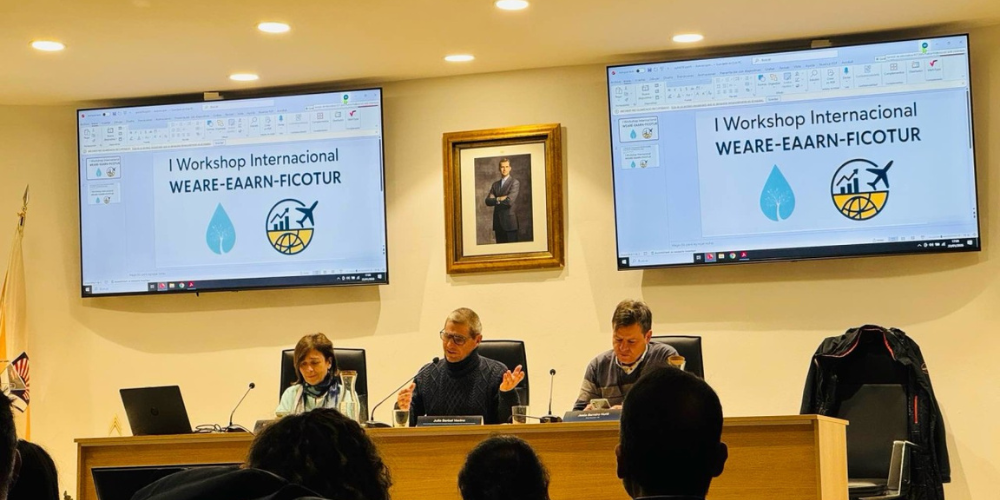
RETOUCH NEXUS Presented at the International Workshop WEARE-EAARN-FICOTUR in Córdoba
RETOUCH NEXUS was represented at the International Workshop WEARE-EAARN-FICOTUR: Establishing Networks, held on 22–23 January 2026 in Córdoba, Spain, within the session “Instruments and Policies…
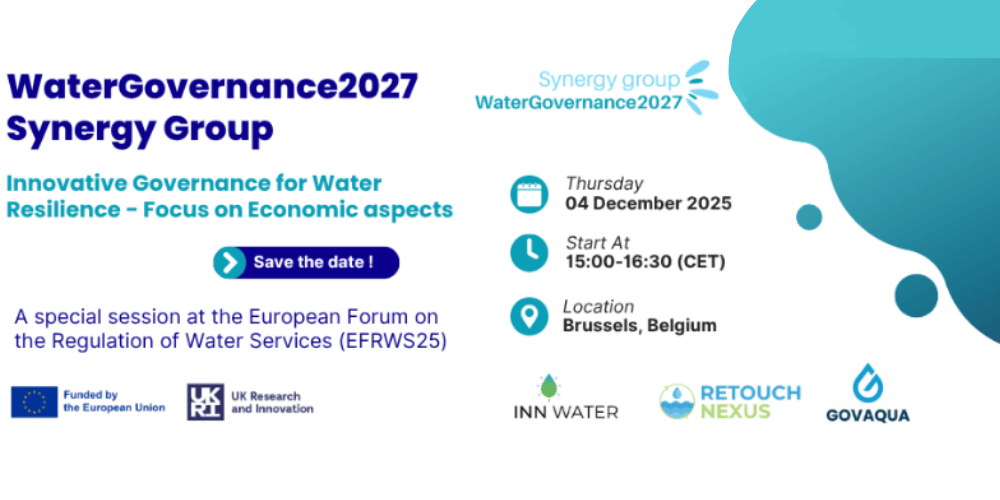
Strengthening Europe’s Water Resilience: Three Projects Unite at Brussels Forum
Brussels, Belgium – December 4, 2025 RETOUCH NEXUS joins InnWater and GOVAQUA to present unified recommendations on economic dimensions of…