A collaboration between X11 (Media, Design & Technology high school, Utrecht) and the Dutch case study of the RETOUCH project, led by the Vrije Universiteit Amsterdam (VUA).
For several weeks, high-school students at X11 explored interlinked water problems and then turned what they learned into infographics that gave voice to their own creative perspective.
Access to sufficient, safe, and clean water is under growing pressure due to climate change and the social system, yet its importance is easy to overlook. This is not only in daily life and drinking water, but also the fundamental connection of water in nature, food production, and energy domains goes unseen. With this in mind, the project set out to answer one central question:
“How can we visualise the frequently overlooked but interconnected role of water and its problems?”
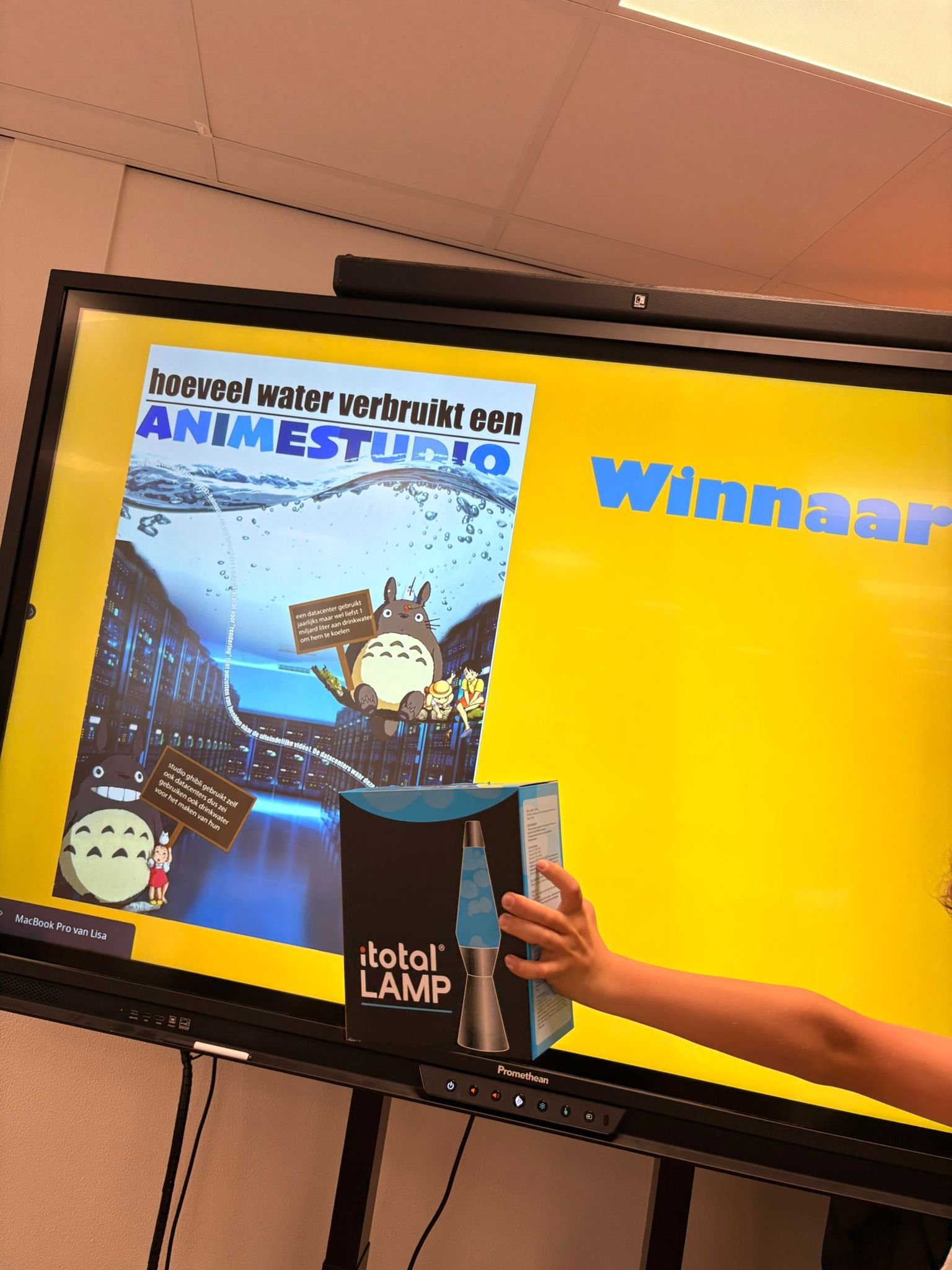
Guided by teachers Lisa Brouns and Kevin Smink, as part of the MVI (Media, Design & ICT) program, the students spent four lessons developing infographics on this theme. The most original and thought-provoking piece from each cluster was awarded a prize: a colorful lava lamp.
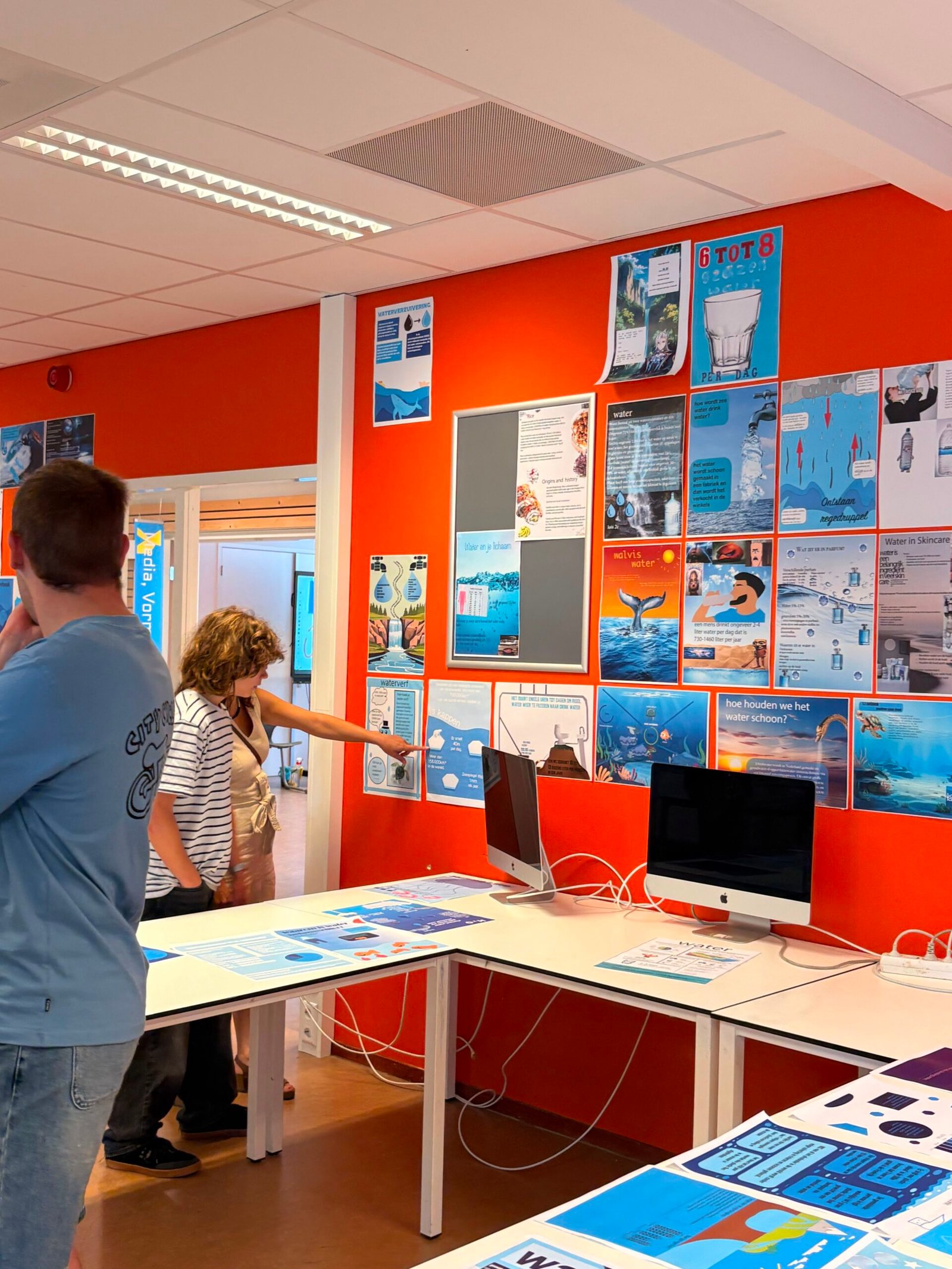
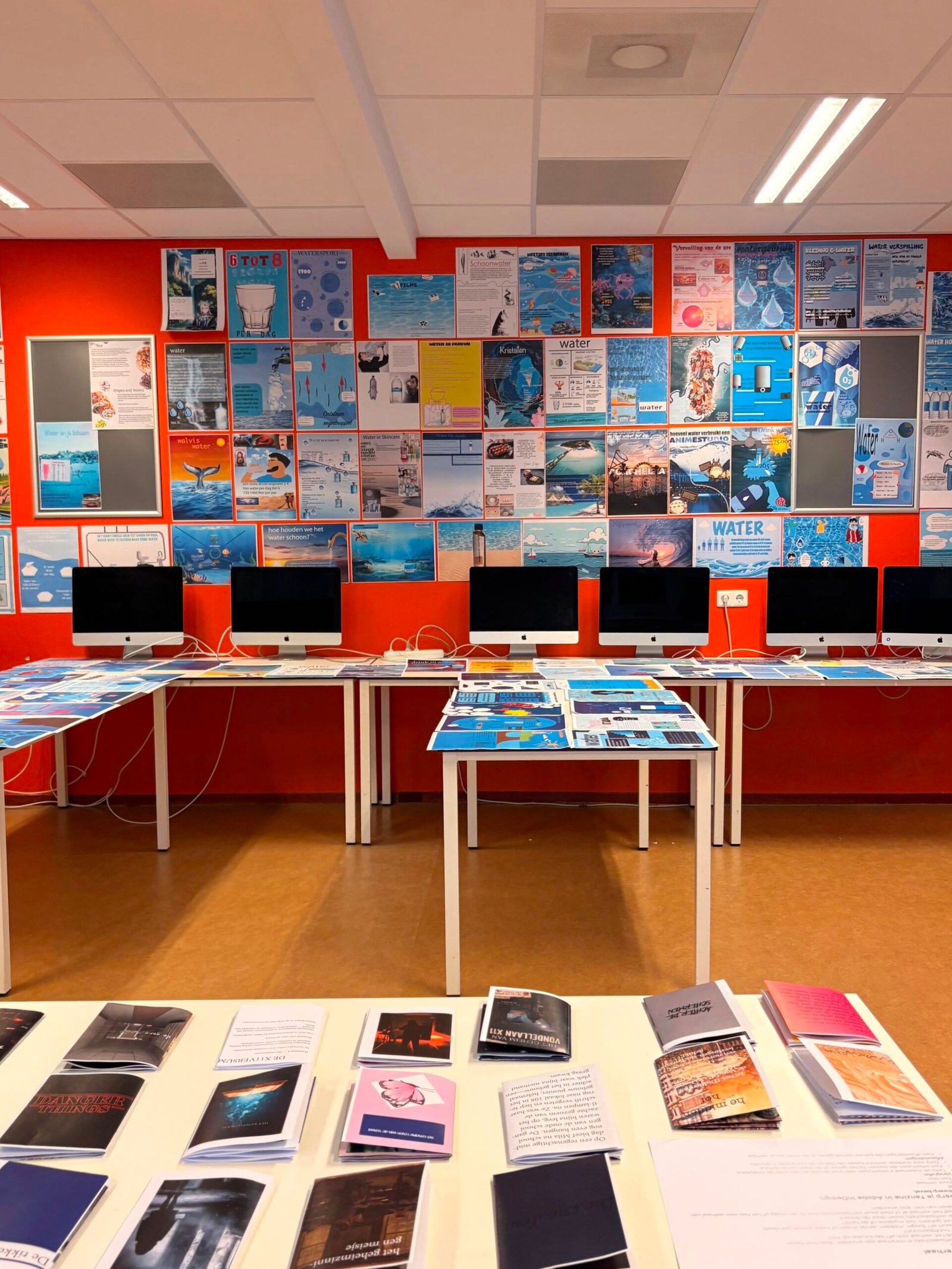
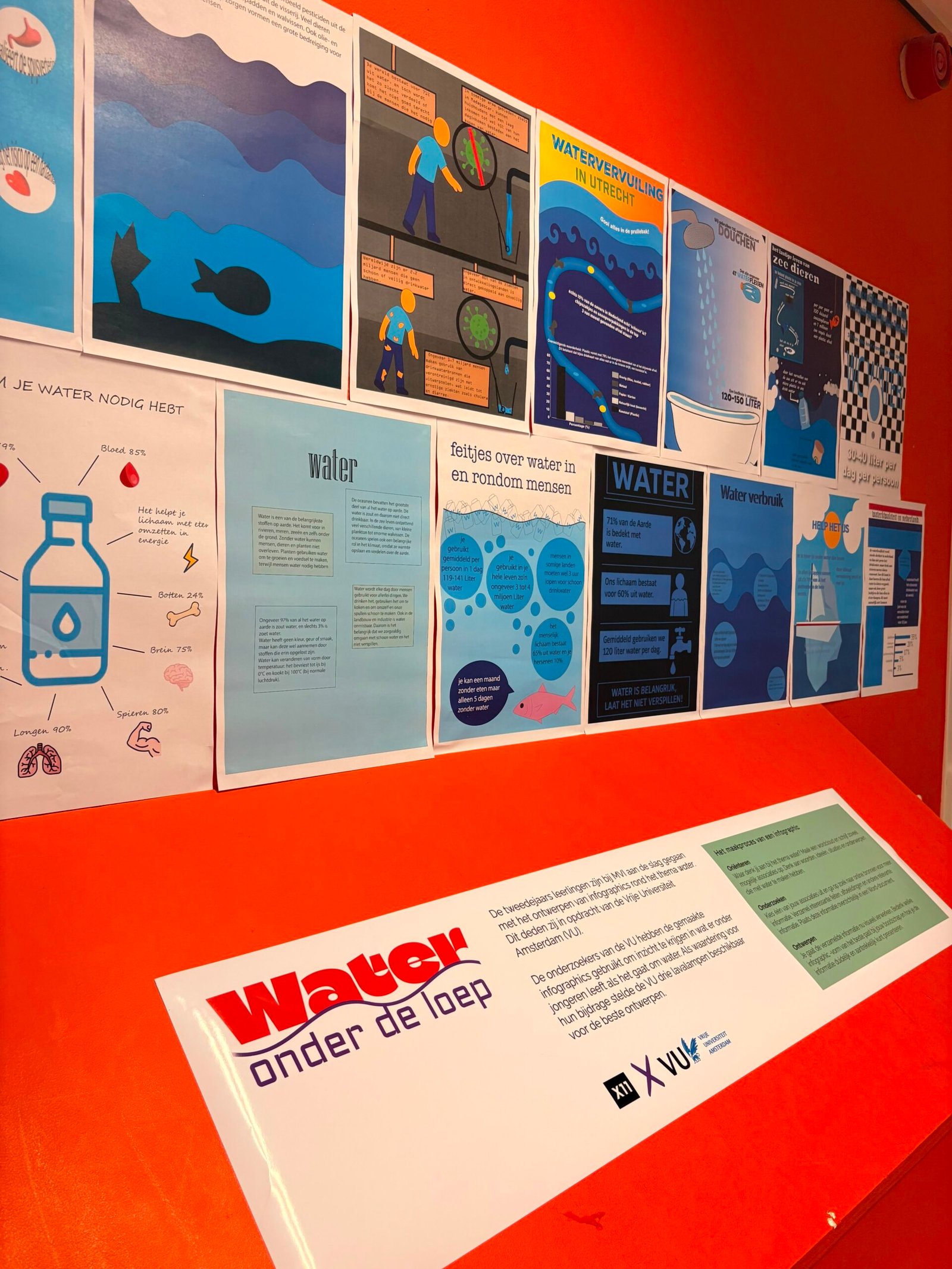
At the X11’s viewing evening, the infographics from all 213 students from three second-year groups were exhibited for friends, parents, and guests to see.
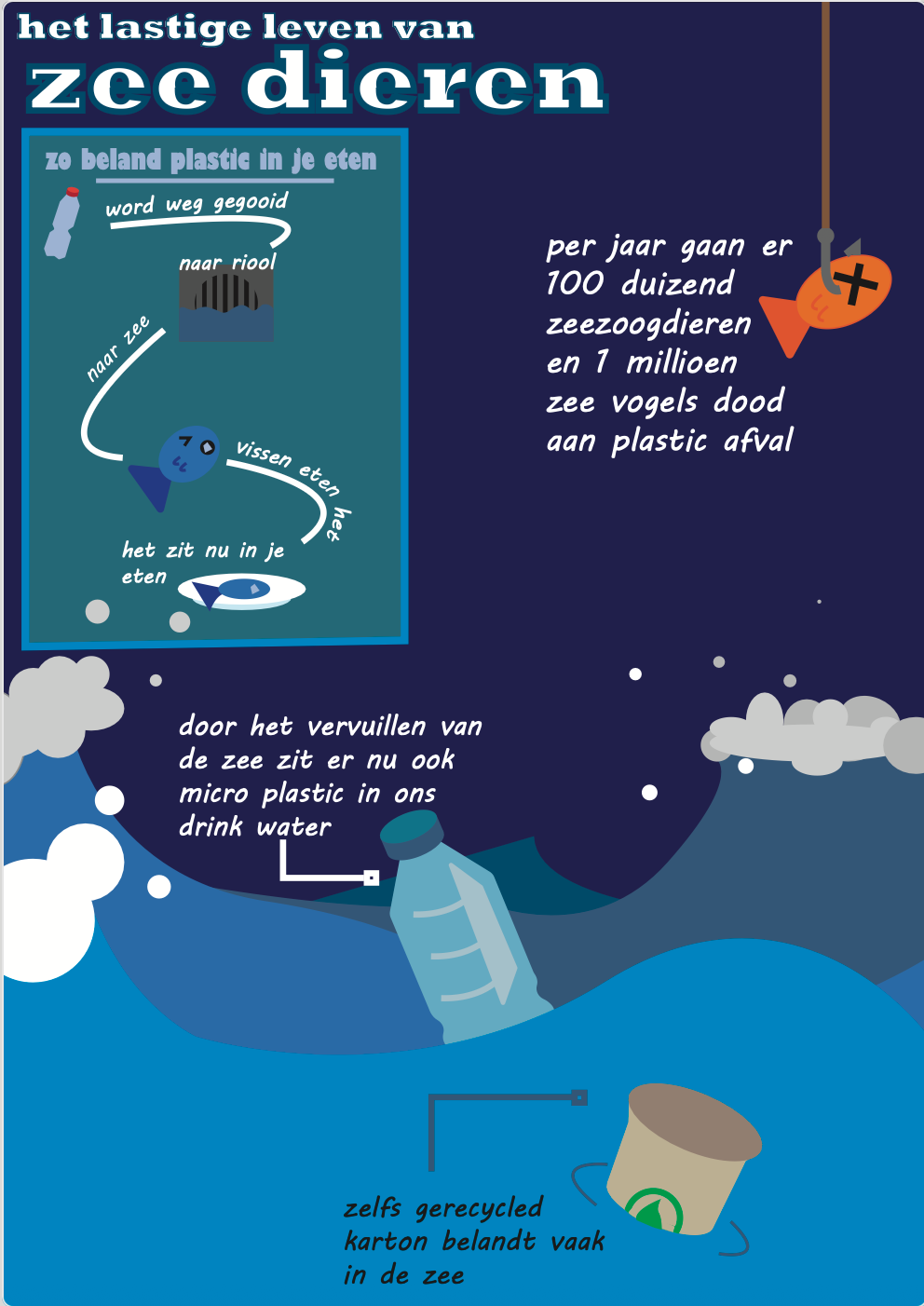
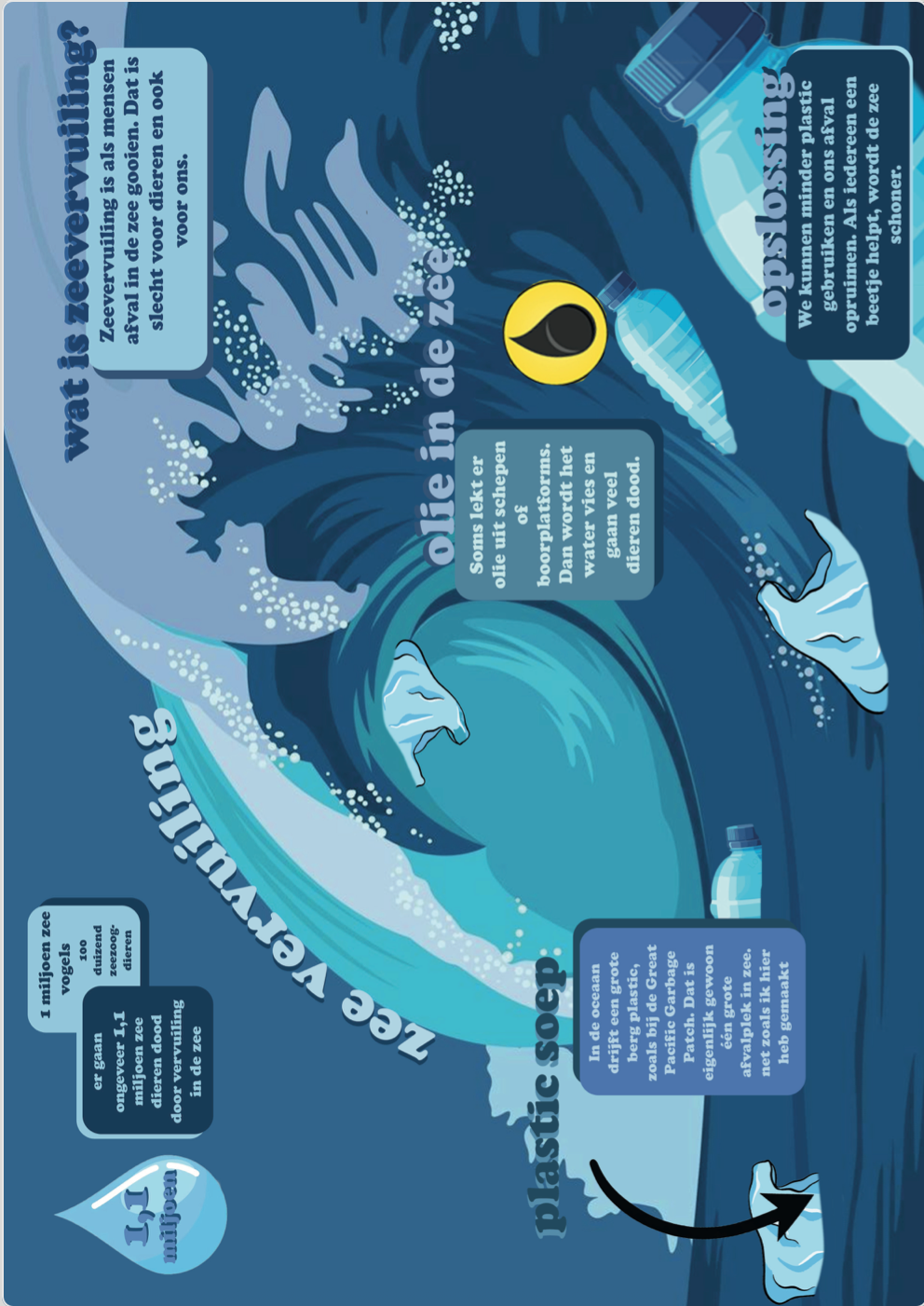
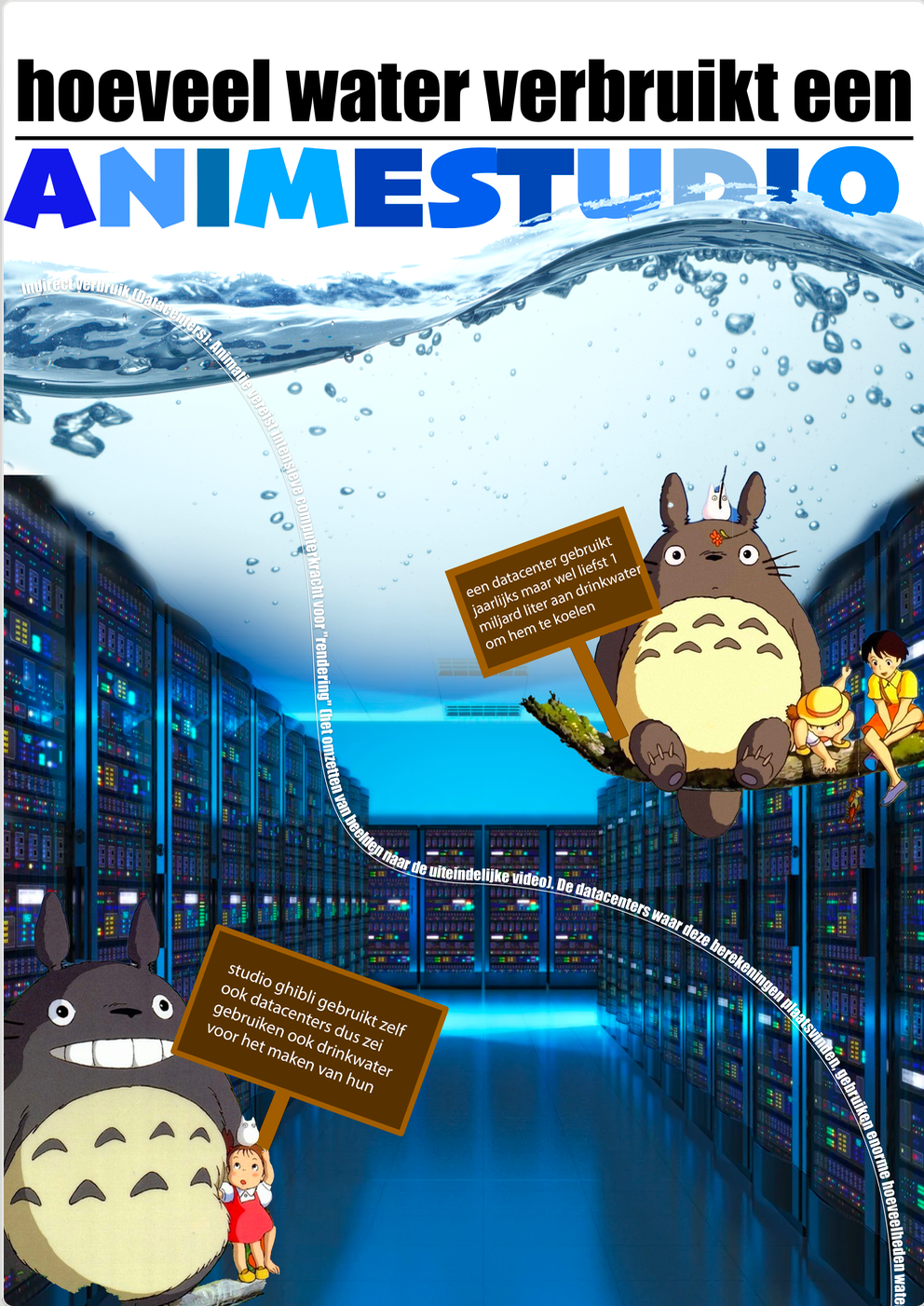
The three winning posters.
The Exercise
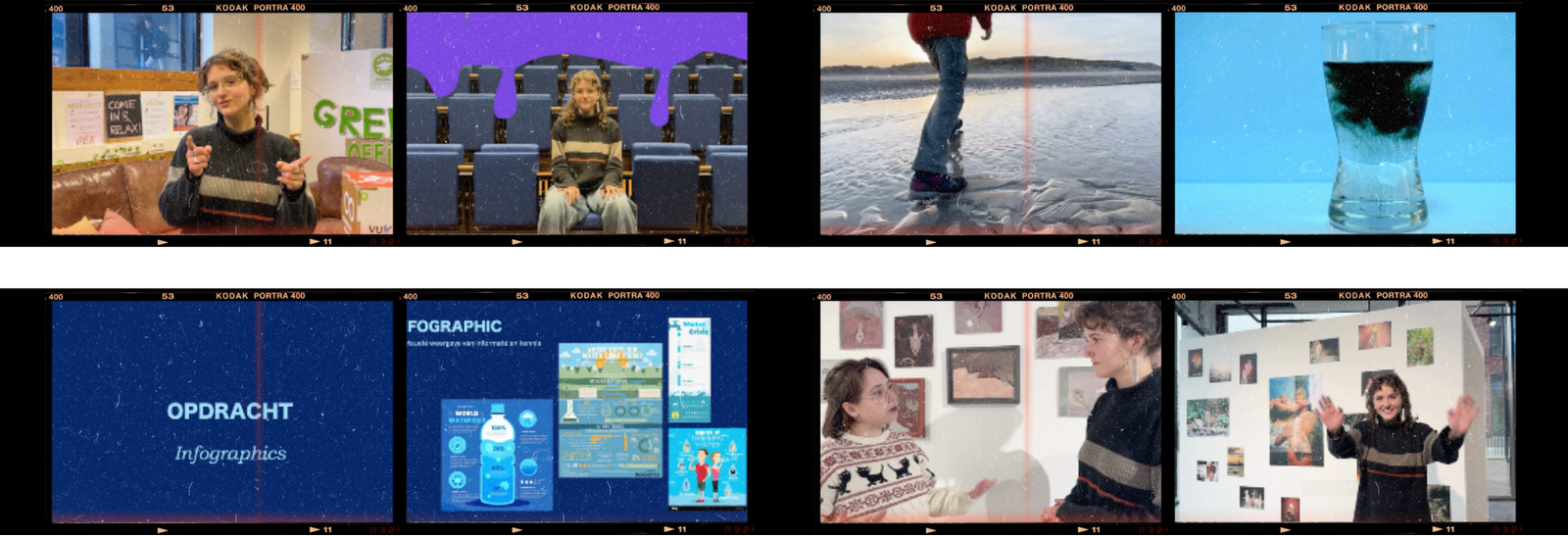
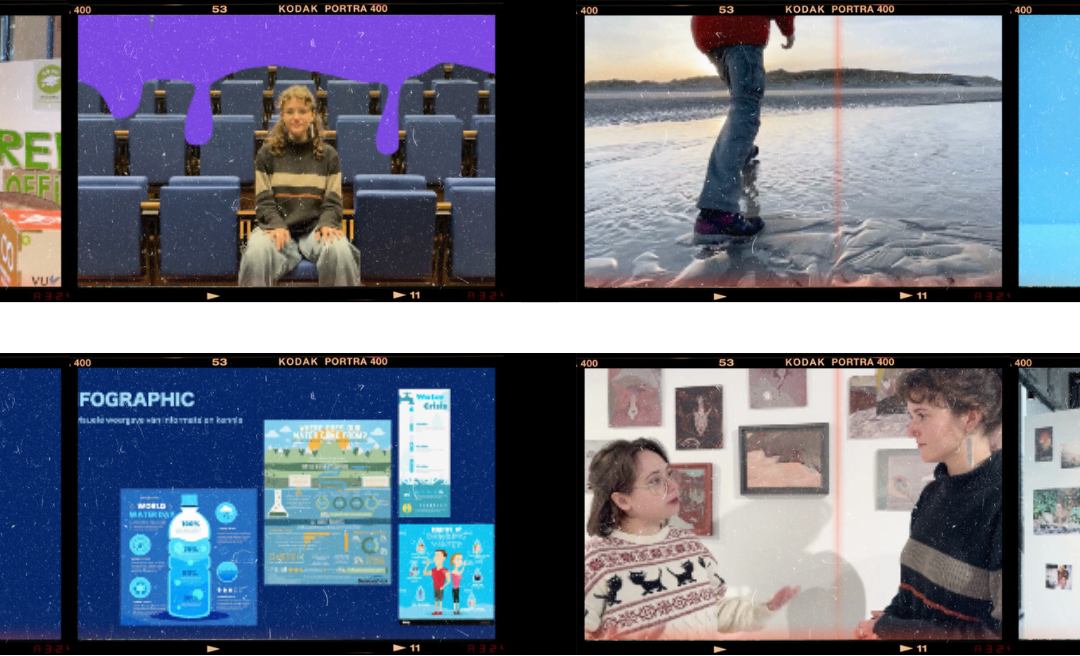
Through a seven-minute video, Clara Luxardo of the Institute for Environmental Studies (VU) invited the students to help her with a challenge. The video was divided into the following sections:
1
Introduction: first, the importance of water as the source of life was introduced.
2
Hidden connections: the video then discussed how water connects to nature, food, and energy domains through processes we rarely see. Examples were how much water is used to produce our food or a single T-shirt.
3
The problem: water scarcity, water extremes such as droughts and floods, and water pollution, were illustrated and discussed with recent examples. After that, it was explained how climate change and social factors tie these issues together.
4
Youth, art and climate action: the critical importance of the younger generation in water and climate issues was then emphasised by an expert. A reflection was posed on how young people can take part in climate activism through artistic methods. This brought into consideration how their voice can contribute to awareness and social impact by inspiring and motivating others.
5
The challenge: students were then invited to help answer the central questions of the theme. After individual research, they visualised and synthesised water issues and their interconnection to other domains from their own perspective. In this, we created space for different emotions or concerns for the future.
6
Creating the infographics: to translate everything into visual art, the students were introduced to the concept of an infographic. Namely, the creation of a clear, visual way of presenting information and knowledge by combining text with images, drawings, graphs, and illustrations. The teachers further elaborated in the classrooms by providing examples and preparatory exercises.
The Results
The final works, showcased at the exhibition, covered a wide range of subjects, from the water circulating in rice production and the water footprint of the AI industry, to the detrimental effects of water pollution on marine life and people among others.
In many shades of blue, the students captured different facets of the issue. Some focused on the causes of water problems, others on possible solutions, and others asked viewers directly to reconsider their everyday relationship with water. Throughout, they combined a sense of urgency with humour using visual metaphors (such as the “memefication” of serious issues) and making complex subjects more accessible and relatable.
The students proudly showed their work and mentioned how the collaboration motivated them, and inspired them to look at water more profoundly. All in all, the assignment was a great success, and we want to thank all the students for their collaboration!
Interested in seeing or using the video assignment? Please reach out to the RETOUCH team or write directly at c.a.r.luxardo@vu.nl.
Acknowledgements
A heartfelt thank you goes to Lisa Brouns with whom I worked side by side, from the initial idea to the final results, and to Kevin Smink for the great teaching. Moreover, a big thank you goes to Evi Schellens and Rosa Gibbels for all their help in editing and producing the video; to Mila Eijskoot for starring in and filming the video; and to the VU Gallery for opening its doors as the filming location.