
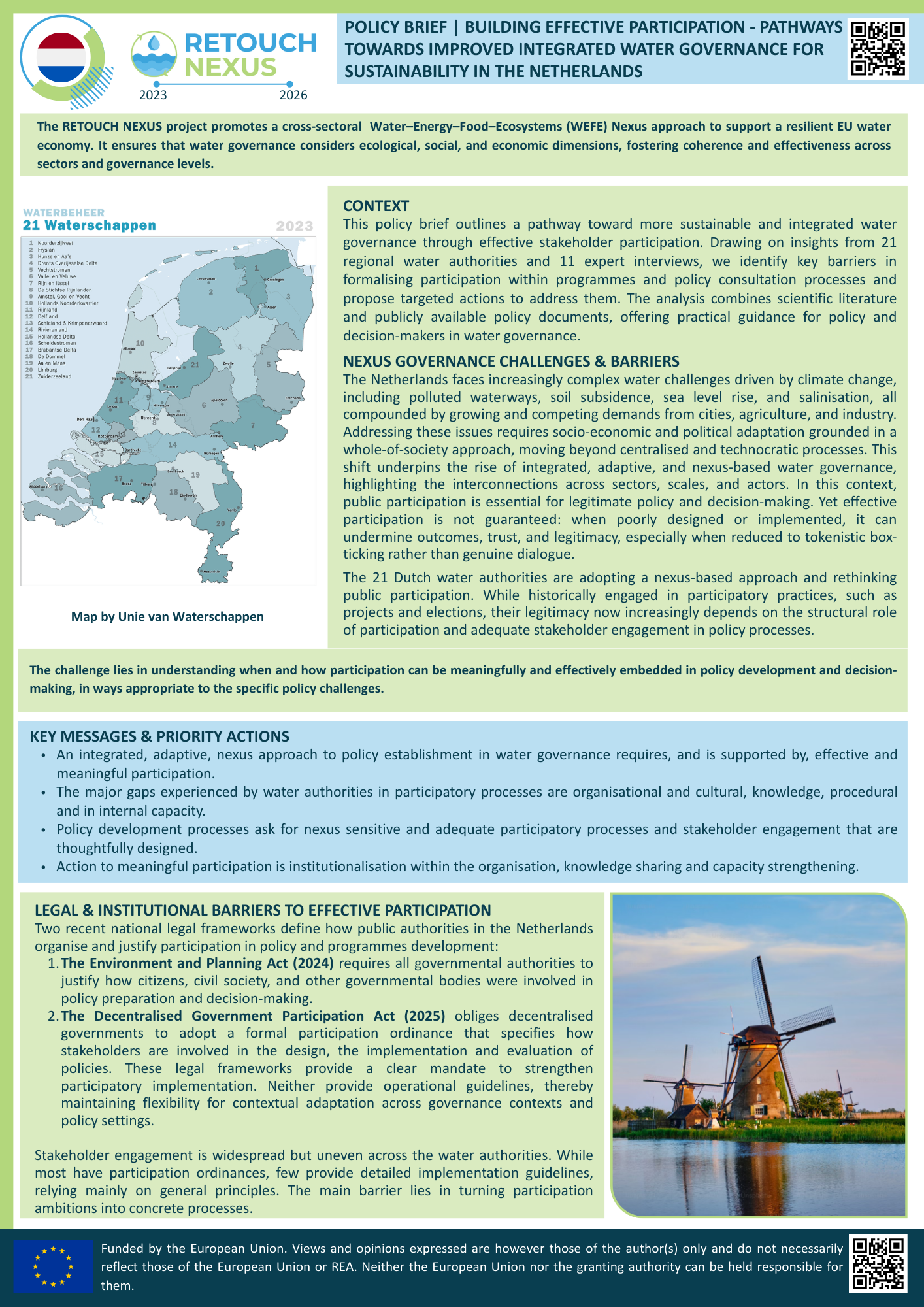
Integrované riadenie vodného hospodárstva v Holandsku
Holandsko čelí čoraz zložitejším výzvam v oblasti vodného hospodárstva, ktoré sú spôsobené zmenou klímy, znečistenými vodnými tokmi, poklesom pôdy, zvýšením hladiny mora, zasolením a zhoršovanými požiadavkami miest, poľnohospodárstva a priemyslu. Hoci má krajina silnú tradíciu participatívneho vodného hospodárstva, nové právne rámce teraz vyžadujú, aby bola participácia štrukturálne zakotvená v politických procesoch a nebola považovaná za dodatočnú záležitosť. Tento politický dokument RETOUCH NEXUS, ktorý vychádza z analýzy všetkých 21 regionálnych vodohospodárskych orgánov a 11 rozhovorov s odborníkmi, odhaľuje kritické rozdiely medzi ambíciami v oblasti participácie a praxou a ponúka konkrétne cesty, ako premeniť symbolické zaškrtávanie políčok na skutočný dialóg, ktorý posilňuje integrované, adaptívne a na nexuse založené riadenie vodného hospodárstva.
Kľúčové posolstvá
1
Efektívna účasť umožňuje riadenie prepojení: Integrovaný, adaptívny prístup k tvorbe vodnej politiky vyžaduje zmysluplnú účasť a je ňou podporovaný. Keďže vodné orgány riešia komplexné výzvy týkajúce sa vody, energie, potravín a ekosystémov, participatívne procesy musia byť starostlivo navrhnuté tak, aby boli citlivé na vzájomné prepojenia a adekvátne výzve.
2
Účasť oslabujú štyri medzery: Hlavné prekážky sú organizačné a kultúrne (účasť nie je integrálnou súčasťou tvorby politík), založené na vedomostiach (rozptýlené odborné znalosti bez jasného vlastníctva), procedurálne (nejasnosť ohľadom štruktúrovania procesov) a súvisiace s kapacitami (obmedzený počet vyškolených zamestnancov, čas a zdroje).
3
Konajte hneď, nie až dodatočne: Účasť musí byť zakotvená na začiatku tvorby politiky ako štrukturálne, zámerné rozhodnutie. Včasné zváženie a jasné vymedzenie problému pomáhajú určiť, kedy je účasť potrebná, a usmerňujú vhodný návrh riešení pre konkrétne výzvy daného kontextu.
4
Budovanie vnútorných kapacít a kultúry: Vodohospodárske orgány by mali zmobilizovať existujúce odborné znalosti manažérov v oblasti životného prostredia a územného plánovania, vytvoriť interné siete účasti, organizovať školenia a vytvoriť vzdelávacie platformy na zdieľanie nástrojov a skúseností medzi oddeleniami a organizáciami.
5
Neustále sledujte, učte sa a prispôsobujte sa: Účinná účasť vyžaduje sledovanie výsledkov aj skúseností zainteresovaných strán, zaznamenávanie spôsobu uplatňovania vstupov, vykonávanie reflexívnych hodnotení a zdieľanie poznatkov medzi tímami s cieľom budovať kolektívne vedomosti a postupne zlepšovať prax.
New Research: A Market-Based Alternative to “Polluter Pays” – Powered by Smart Contracts
We're proud to spotlight the latest publication from our partner Erik Ansink (Vrije Universiteit Amsterdam),…
New Policy Brief: Drought-Adaptation Packages
Farmer-Centred Drought Policy in Noord-Holland Despite increasing water scarcity, farmer investment in drought adaptation in…
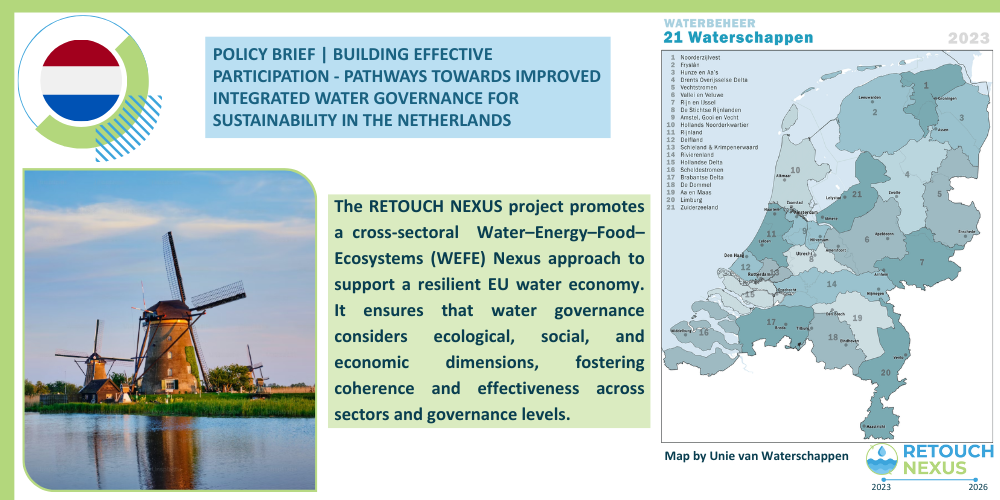
Nový politický dokument: Budovanie efektívnej účasti na riadení vodných zdrojov v Holandsku
Integrated Water Governance in the Netherlands The Netherlands faces increasingly complex water challenges driven by…
Informative evening for HHNK’s Freshwater Availability Programme
On Thursday, 11 September, the water authority Hoogheemraadschap Hollands Noorderkwartier (HHNK) held an information evening…

🤝 Building a Participatory Path for Water Governance in North Holland
RETOUCH NEXUS supports stakeholder engagement for the Freshwater Availability Program. In response to the growing…

Addressing Water Scarcity in the Netherlands: Insights from the RETOUCH-NEXUS Project
Water scarcity is an increasingly pressing issue in the Netherlands, driven by the dual challenges…

New Publication: Exploring Fair and Sustainable Pollution Management by our Project Partner VUA!
We are delighted to announce a new publication by our project partner, Vrije Universiteit Amsterdam…
Establishing a baseline to characterise each RETOUCH NEXUS case study
Last September, our project completed two tasks aimed at exploring water governance models, institutional frameworks…