
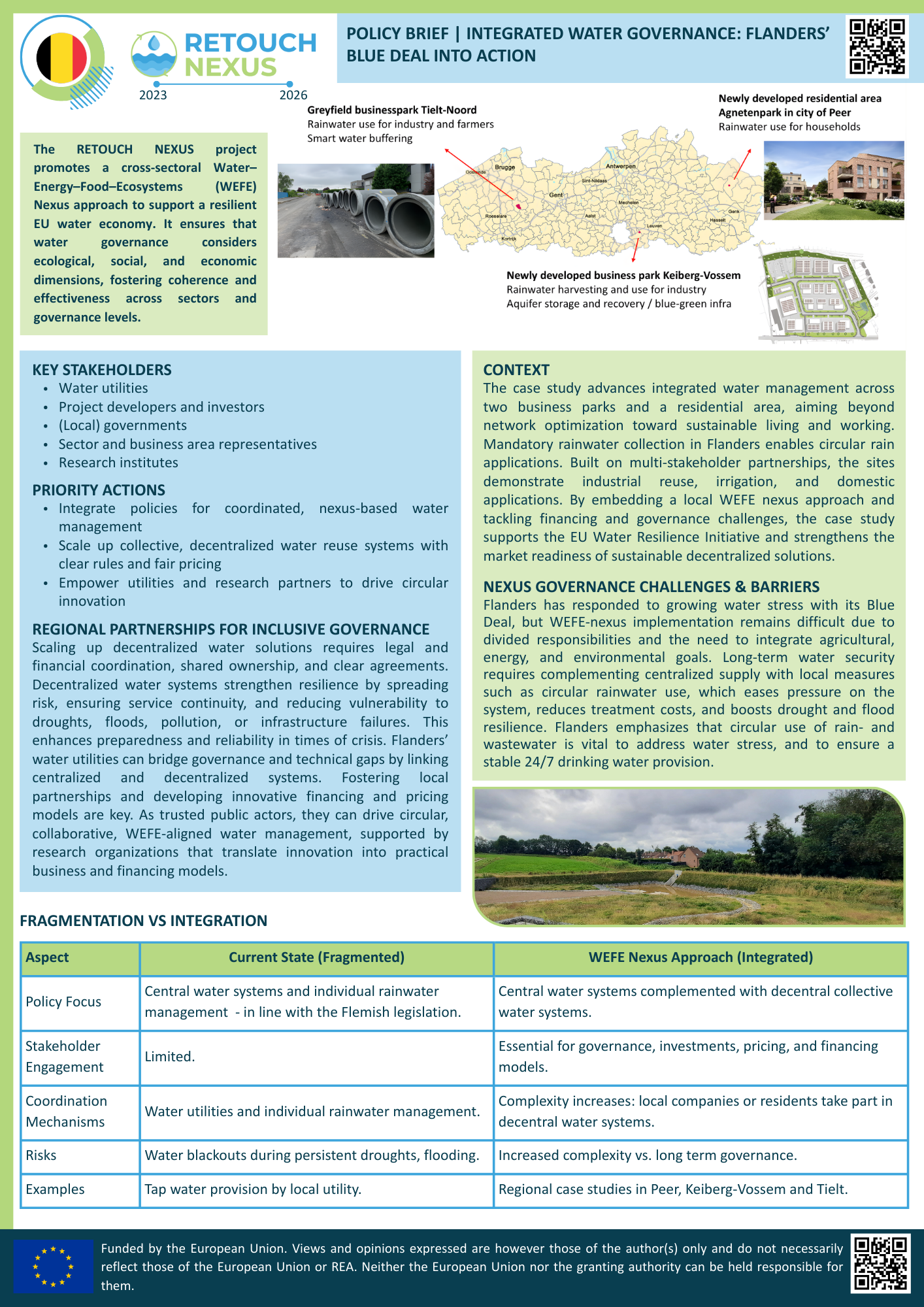
Integrované riadenie vodného hospodárstva vo Flámsku
Flandry v Belgicku čelia rastúcemu nedostatku vody, ktorý ohrozuje spoľahlivosť ich centralizovaného zásobovania pitnou vodou, čo podnietilo ambicióznu stratégiu regiónu Blue Deal, ktorá kladie dôraz na cirkulárne využívanie dažďovej a odpadovej vody. Táto politická správa RETOUCH NEXUS skúma inovatívne demonštračné projekty v dvoch priemyselných parkoch a jednej obytnej oblasti, ktoré prezentujú priemyselné opätovné využitie, zavlažovanie a domáce využitie vody, pričom začleňujú miestny prístup Water-Energy-Food-Ecosystems nexus. Analýzou skutočných skúseností s implementáciou ponúka dokument praktické pohľady na rámce riadenia, obchodné modely, mechanizmy financovania a partnerské dohody potrebné na rozšírenie decentralizovaných, kolektívnych riešení v oblasti vody z pilotných projektov na systematické prístupy, ktoré dopĺňajú centralizovanú infraštruktúru a posilňujú regionálnu odolnosť.
Kľúčové posolstvá
1
Decentralizácia zvyšuje odolnosť prostredníctvom rozloženia rizika: Rozloženie dodávok vody medzi viaceré systémy zabezpečuje kontinuitu služieb a znižuje zraniteľnosť voči suchám, povodniam, znečisteniu alebo poruchám infraštruktúry. Lokálny zber dažďovej vody a opätovné využívanie odpadových vôd znižujú tlak na centralizované čistenie, znižujú náklady a zlepšujú odolnosť voči suchám aj povodniam.
2
Zložitosť riadenia vyžaduje novú koordináciu: Prechod od centralizovaných systémov k hybridným prístupom prináša výzvy, ktoré si vyžadujú právnu jasnosť v otázkach vlastníctva, zodpovednosti a noriem kvality, ako aj transparentné dohody, ktoré definujú úlohy a zodpovednosti medzi vodárenskými spoločnosťami, obcami, súkromnými subjektmi a obyvateľmi.
3
Obchodné modely musia preukázať plnú hodnotu: Komplexné analýzy nákladov a prínosov by mali zohľadňovať zabránené škody spôsobené povodňami, odložené investície do centrálnej infraštruktúry a environmentálne prínosy spolu s priamou hodnotou dodávok vody. Dobre navrhnuté cenové mechanizmy musia zosúlaďovať stimuly, zlepšovať návratnosť nákladov a odmeňovať efektívne využívanie.
4
Vodárenské spoločnosti môžu prepojiť centralizované a decentralizované systémy: Ako dôveryhodní verejní aktéri s technickými znalosťami môžu verejné služby podporovať miestne partnerstvá, vyvíjať inovatívne modely financovania a presadzovať cirkulárne, kolaboratívne riadenie vodných zdrojov v súlade s WEFE, ktoré spája decentralizované riešenia s širším plánovaním infraštruktúry.
5
Miestna integrácia WEFE maximalizuje sprievodné prínosy: Prepojenie vodného hospodárstva s energetickým zhodnocovaním odpadových vôd, integráciou obnoviteľných zdrojov energie a ekosystémovými službami, ako je napríklad doplňovanie podzemných vôd v rámci rovnakých miestnych projektov, zvyšuje odolnosť vodných a energetických zdrojov a zároveň znižuje náklady a emisie.
RETOUCH NEXUS at World Water Week 2026: Advancing Innovative Water Governance
Stockholm, Sweden – 23-27 August 2026 RETOUCH NEXUS is proud have participated in the World…
New Policy Brief: Collective & Scalable Strategies for Non-Conventional Water Resources
Collective Rainwater Management in Flanders Flanders faces growing water stress, prompting increasing interest in decentralised,…
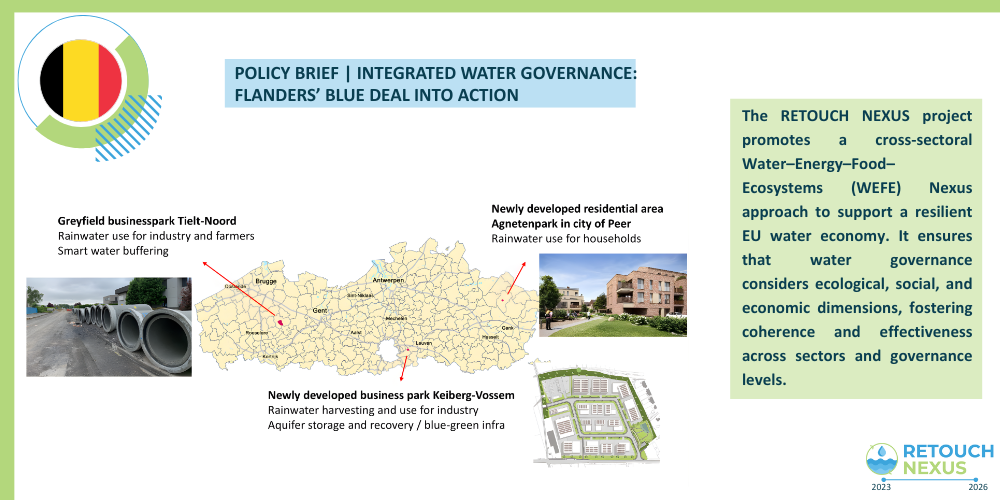
Nový politický dokument: Integrované riadenie vodných zdrojov – Flanderská modrá dohoda v praxi
Integrated Water Governance in Flanders Flanders, Belgium faces growing water stress that threatens the reliability…

Belgian Case Study Takes Center Stage: Agnetenpark’s Innovative Water System Featured on National Television
RETOUCH NEXUS project demonstrates practical water solutions through media engagement. When most people think about…

🌊 Achieving Water Benefits at Business Parks – A RETOUCH NEXUS Belgian Case Study Event
On 20th June 2025, VITO, together with the City of Ghent, North Sea Port and…

Promoting Stakeholder Engagement for Improved Water Management in Flanders with the Flemish Poultry Test Farm
The RETOUCH NEXUS project is excited to announce an upcoming stakeholder engagement activity as part…
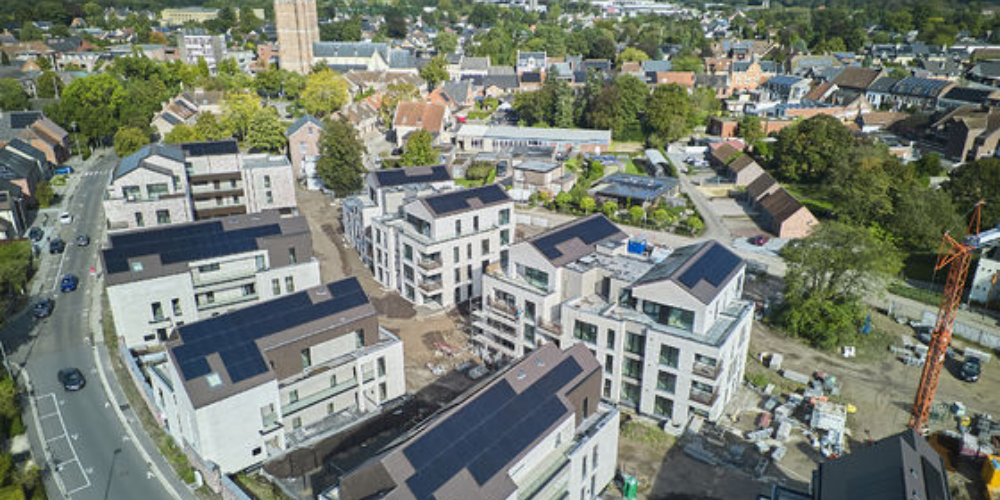
Resident Information Session on Sustainable Water Systems at Agnetenpark Peer
On September 3, 2024, a resident information meeting was held at Peer Library, bringing together…

Innovative Water Management: Site Visit to Business Park Tielt Noord
On August 23, 2024, the RETOUCH NEXUS Belgium case study hosted a stakeholder event at…

Visit to the WaterProof Experience Container: A Collaborative Exchange for the RETOUCH NEXUS Project
On Tuesday, June 18, 2024, representatives from various RETOUCH project case studies gathered in Ostend…
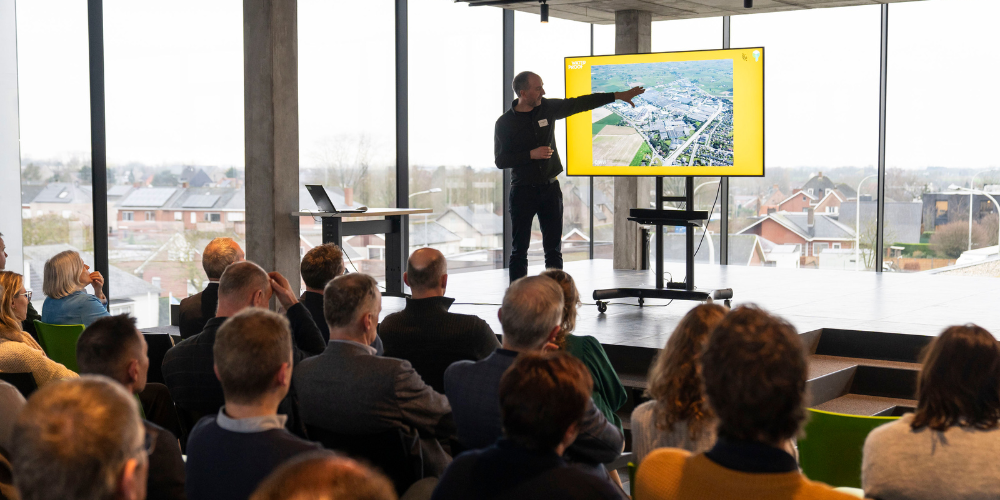
The Belgian case study of the RETOUCH NEXUS project held its First stakeholder engagement workshop!
Our Belgian case study leader, Vlaamse Instelling voor Technologisch Onderzoek (VITO) was more than happy…